Trending Searches
The Buffalo Bicycle: A Lifeline for Global Communities
While many of us view bicycles primarily for leisure or sport, for countless individuals in developing regions, a bicycle represents far more – it is a critical conduit to fundamental resources like schooling, medical care, and financial independence. The Buffalo Bike, developed by the ingenious minds at World Bicycle Relief (WBR), stands as a testament to this transformative power. This unique cycle is engineered to provide robust and adaptable transportation, meticulously crafted to meet the demanding conditions and diverse needs of communities across places like Southeast Asia and Africa.
The genesis of WBR and the Buffalo Bike dates back to the devastating 2004 Indian Ocean tsunami. Witnessing the immense disruption to livelihoods and infrastructure, SRAM co-founder F.K. Day and documentary photographer Leah Missbach Day were moved to action. They recognized the bicycle's potential as a resilient mode of transport in the affected areas, leading to the establishment of WBR in 2005. Initially, WBR distributed 24,000 adapted bicycles in Sri Lanka, sourcing components from the existing bike industry. As the organization expanded its reach, it became clear that a purpose-built bicycle was essential. This realization led to the development of the Buffalo Bike, a machine specifically designed to withstand arduous terrains and carry significant loads, while remaining simple to maintain and repair, thus directly addressing the practical challenges faced by its users.
The Buffalo Bike exemplifies ingenious design, blending mountain bike-like resilience with cargo-carrying functionality. Engineered to surpass rigorous testing standards, this 50-pound steel-framed bicycle can effortlessly transport up to 220 pounds. Its standout feature is an innovative two-speed drivetrain, comprising two cogs, two chains, and two chainrings. This system allows riders to easily switch between a lower gear (1.50:1 ratio) for ascents or heavy loads and a higher gear (2.73:1 ratio) for faster travel, simply by backpedaling. Furthermore, the bike boasts a reinforced cargo rack with modular, bolted sections for easy serviceability, and a robust motorcycle-style kickstand designed for durability. Beyond its mechanical prowess, the Buffalo Bike’s true value lies in its social impact, facilitating access to essential services and fostering economic development, yielding a remarkable 14.7-to-1 return on investment in some regions. By optimizing travel and carrying capacity, WBR's efforts profoundly improve the daily lives and future prospects of individuals and entire communities, demonstrating how a thoughtfully designed bicycle can be a powerful engine for positive change.
The story of the Buffalo Bike vividly illustrates how thoughtful engineering and a humanitarian vision can converge to create profound social change. It reminds us that innovation isn't solely about high-tech gadgets, but often about practical solutions that empower individuals and communities to overcome everyday obstacles and build brighter futures. This initiative stands as a beacon of hope, demonstrating that even a simple machine, when designed with purpose and distributed with care, can unlock a world of possibilities, fostering education, health, and economic stability for those who need it most.
Related Articles
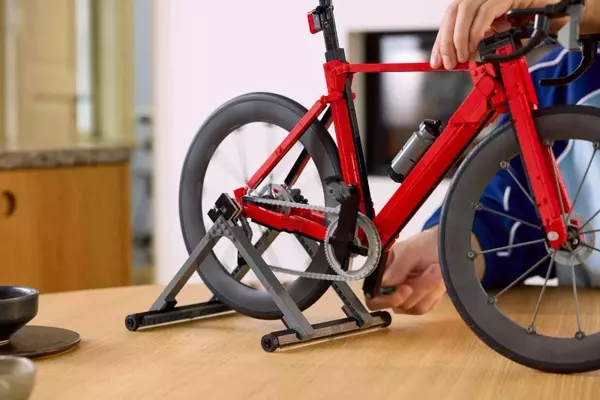
Lego Icons Road Bike Set: Unprecedented Price Drop during Amazon's Big Deal Days

Unveiling the Grueling Demands of Elite Cycling: Quinn Simmons's World Championship Power Data