Trending Searches
Crappie Comeback at Tuttle Creek: May Fishing Frenzy
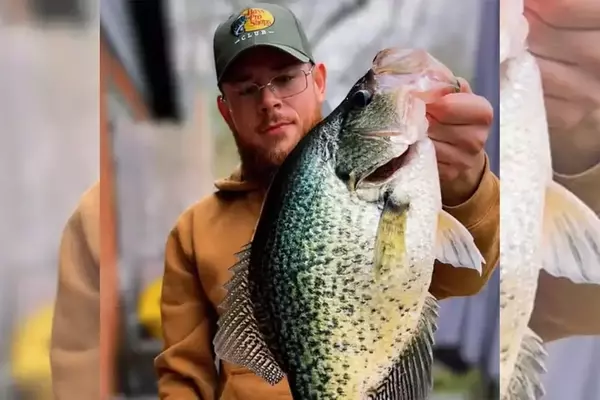
Tuttle Creek Reservoir, nestled in the heart of northeast Kansas, is currently a hotspot for anglers as its robust crappie population thrives. For years, the reservoir's substantial crappies were often out of reach during their May spawning period due to frequent spring flooding. However, a return to more typical spring weather has created ideal conditions, making these prized fish readily available to patient fishermen. The Kansas Department of Wildlife and Parks reports a historic high in the abundance of crappies exceeding ten inches, a recovery largely sparked by the 2019 flood which dramatically enhanced fish habitats within the reservoir.
May's Miraculous Crappie Fishing at Tuttle Creek
In early May, the crappie spawning season commences, drawing anglers to Tuttle Creek Reservoir. Longtime fisherman and tourism advocate Rick Dykstra recently set out on the reservoir, launching his boat mid-lake. Despite the water level being nearly ten feet above average, a common occurrence for the reservoir, Dykstra found the conditions to be favorable. "Tuttle has seen much higher water levels," Dykstra noted, recalling past instances of severe flooding that rendered the area unfishable. "But now, it's fishable."
Dykstra began his search in rocky coves with limited success. However, his luck shifted dramatically upon moving to a shallow pocket where the bank transitioned from rock to gravel. Observing the calm waters, temperatures in the 60s, and sparse vegetation, Dykstra recognized it as a prime spawning location. Casting a white Road Runner into the shallows, he immediately felt a distinct tug, landing a sizable crappie. Positioning his boat in this fortuitous spot, Dykstra and his companion consistently reeled in large crappies. He expressed astonishment at the density of fish found in such a small area, contrasting it with the barren rock banks explored earlier.
The month of May in Kansas is often hailed as magical for crappie fishing, particularly when these fish migrate to shallow waters for spawning. Success hinges not merely on casting jigs or minnows into the shallows, but on locating the fish. Fluctuations in weather, such as cold fronts, can drive crappies to deeper waters, only for them to return once conditions stabilize. Dykstra's recent outing was a testament to hitting these conditions perfectly. He recounted the rarity of such prolific crappie catches at Tuttle Creek, a sentiment echoed by other anglers who also reported impressive hauls.
Interestingly, Dykstra relied on traditional methods, forsaking his boat's advanced sonar due to technical issues. Instead of fixating on screens, he meticulously observed the banks for signs of crappie activity. He highlighted the benefit of spring fishing: "When fish are near the banks and the weather is steady, electronics aren't essential." This allows shore anglers to also enjoy productive fishing.
The crappie resurgence at Tuttle Creek is well-documented. Ely Sprenkle, a fisheries biologist with the Kansas Department of Wildlife and Parks, confirmed that the reservoir has seen an unprecedented number of crappies exceeding ten inches since its construction in 1962. While Tuttle Creek may not boast the highest crappie density compared to other Kansas reservoirs due to its limited habitat, its remarkable comeback story is significant. Sprenkle credits the 2019 flood, which, by keeping water levels high all summer, fostered extensive new flooded vegetation—an ideal habitat that spurred a boom in the crappie population. This trend of producing impressive-sized crappies has continued, supported by a healthy shad population that ensures a strong growth rate for the fish.
Kansas offers a wealth of crappie fishing opportunities across its numerous reservoirs. May is prime time for shallow-water crappies throughout the state. Dykstra proposes a unique angling challenge: fish Milford Lake one day, Tuttle Creek the next, and Council Grove Reservoir on the third. He assures that successful completion of this challenge will result in a cooler full of fish, as all three reservoirs are renowned for their excellent crappie fishing and are geographically close. Other regions of Kansas also provide clusters of prime crappie fishing, including Clinton, Perry, and Hillsdale in the east; Melvern and John Redmond in east-central Kansas; and Fall River, Elk City, and Big Hill in the southeast. With the spawning season extending throughout May, there is still ample opportunity for anglers to partake in this thriving activity. Dykstra believes many would be pleasantly surprised by the quality of crappie fishing in Kansas, noting the abundance of quality fish across numerous locations, even if they don't rival the sheer size found in states like Mississippi.
This narrative vividly illustrates the dynamic nature of natural ecosystems and the profound impact environmental events, such as floods, can have on aquatic populations. The story of Tuttle Creek's crappie resurgence is a powerful reminder of nature's resilience and its capacity for recovery when conditions align favorably. For anglers, it underscores the importance of patience, observation, and adaptability, even in an age of advanced fishing technology. Ultimately, it celebrates the joy of discovery and the satisfaction of a successful day on the water, proving that sometimes, the best fishing experiences are found through a deep connection with the environment rather than reliance solely on gadgets. This comeback serves as an encouraging example for fisheries management and conservation efforts, showcasing how natural processes, when understood and respected, can lead to thriving ecosystems and rich recreational opportunities.