Trending Searches
A Cyclist's Journey: Overcoming a Mystery Heart Condition to Bike Around the World
Cycling Beyond Limits: A Heartfelt Odyssey
An Unexpected Halt: The Initial Collapse and Medical Uncertainty
Tom Williamson, a passionate cyclist whose love for the sport blossomed during a 2019 Italian trip, envisioned an ambitious bikepacking adventure across the globe. By 2020, he was in peak physical condition, ready to embark on his dream. However, his aspirations were abruptly interrupted during a local ride from Land's End to John o' Groats (LEJOG). On the third day, his heart rate inexplicably surged, leading to a sudden collapse. He awoke on the pavement, disoriented and with a facial injury, completely unaware of what had just transpired.
The Ordeal of Undiagnosed Illness: Two Years in Limbo
Following this alarming incident, Williamson spent two nights in Birmingham Hospital, forced to abandon his LEJOG journey. This period marked the beginning of a distressing two-year medical odyssey. Despite being a fit 27-year-old with no prior cardiac issues, extensive tests, including ECGs, echocardiograms, MRIs, Holter monitoring, and exercise tolerance tests, all returned inconclusive results. Doctors were unable to identify the cause of his condition, leaving him in a state of unsettling uncertainty and questioning the future of his cycling ambitions. This prolonged period of not knowing was deeply frustrating for Williamson, who had found a significant part of his identity and happiness in endurance cycling.
A Diagnosis Emerges: Supraventricular Tachycardia (SVT)
In January 2024, after years of medical ambiguity, Williamson finally received a diagnosis: Supraventricular Tachycardia (SVT). This condition involves an irregular heartbeat originating from the heart's upper chambers, causing rapid or erratic pulsations. Initial attempts to treat his SVT with an ablation procedure, which involves creating a small scar to block faulty electrical signals, were unsuccessful. The surgeons struggled to pinpoint the exact location of the anomaly. Nine months later, a second ablation procedure also failed, and his symptoms persisted, leaving him and his medical team searching for answers.
Pursuing Passion Against Medical Advice: A Calculated Risk
Despite the medical setbacks and advice to limit physical exertion, Williamson refused to put his life on hold. He continued his bikepacking adventures, sometimes discreetly, acknowledging the caution from his doctors but trusting his own understanding of his body's responses. After his first unsuccessful surgery, he ventured through Macedonia and Greece, adhering to general medical guidelines while closely monitoring his own symptoms. Following the second, seemingly successful, ablation, he embarked on a series of back-to-back trips to India and Central America, even experiencing another collapse in a ditch in India, which required assistance from locals. He viewed these experiences as a balance between managing risk and living a full life, profoundly shaped by his independent exploration.
A Breakthrough and a New Mission: Cycling for a Cause
The turning point arrived in June of the previous year. After four grueling hours, surgeons successfully located and ablated the problem area in Williamson's heart during a third procedure. Since then, he has been completely symptom-free, experiencing a profound sense of hope and renewed vitality. With his health restored, Williamson embarked on a 400-mile bikepacking tour of China, from Zhangjiajie National Park to Guilin, without any of the previous symptoms or discomfort. This transformative experience has inspired him to plan a round-the-world bikepacking journey, starting in June, to raise funds for Cardiac Risk in the Young (CRY). His goal is to support CRY's mission to reduce sudden cardiac deaths in young people, a cause that resonates deeply with his own challenging experience.
A Mother's Unwavering Support and Lingering Concerns
Tom's mother, Bonnie Williamson, openly shares her continuous worry about his solo bikepacking expeditions, especially given his past heart condition. She vividly recalls the fright of seeing his heart-rate monitor alarmingly high while he was at rest, and the initial shock of his first collapse. As a former NHS mental health nurse, she provided invaluable support and practical advice throughout his ordeal, including suggesting the portable cardiac monitor that eventually led to his diagnosis. While immensely relieved by the successful surgery, Bonnie's concerns now extend to the inherent dangers of cycling alone in remote areas, emphasizing that a mother's worry for her son's safety never truly ceases.
Related Articles

Velocio Men’s Alpha Air Jacket: A Comprehensive Review
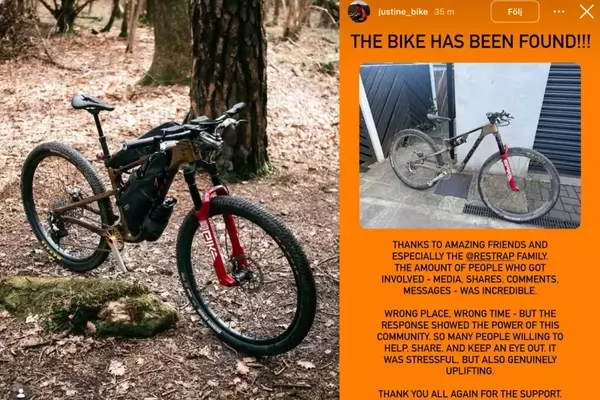
Ultra-Cyclist's Stolen Bike Recovered in Leeds, Highlighting Community Support