Trending Searches
Cyclo-Cross: Upholding Tradition Amidst Evolving Cycling Disciplines
Cycling, as a sport, is often deeply connected to its historical roots, embracing established practices, events, and a timeless visual appeal. For many enthusiasts, this enduring legacy is a significant draw, evoking admiration for classic racing bicycles, their gleaming chrome details, and the stories embedded within their frames from decades past.
However, there are moments when the sport's traditionalism can feel out of step with contemporary advancements. A notable instance was the UCI's short-lived attempt to revert the Hour record to the equipment standards of Eddy Merckx's 1972 ride, an initiative that ultimately faced strong resistance and was abandoned. In contrast, amateur cyclo-cross has always distinguished itself with its accessible, open-to-all approach and imaginative, themed races, offering a refreshing departure from the more rigid conventions of other cycling disciplines. It once embodied a rebellious spirit, constantly challenging norms and delivering the unexpected.
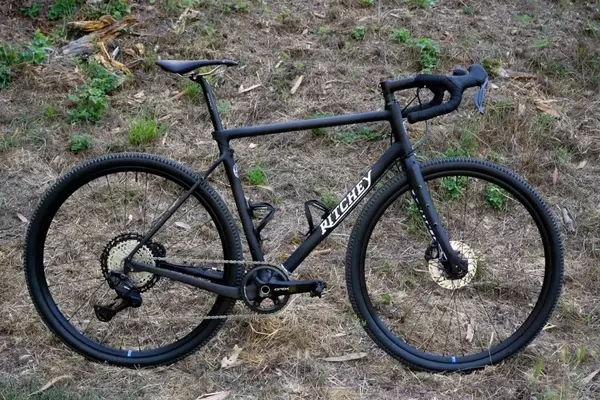
Yet, with the emergence of gravel riding, characterized by its wide tires and relaxed ethos, cyclo-cross, particularly at the professional level, is beginning to appear more traditional by comparison. Cameron Mason, a cyclo-cross rider for GB and Seven Racing, suggests that maintaining the unique characteristics of cyclo-cross bikes is crucial to preventing the sport from converging with mountain biking or gravel riding. Mason, who recently secured fifth place at the European Cross Championships, acknowledged that using larger, gravel-sized tires (40mm and above) would offer practical advantages in cyclo-cross. However, he expressed doubt about whether such a change would benefit the sport as a whole, emphasizing that the inherent tradition of cyclo-cross is vital for preserving its distinct identity and preventing it from transforming into another cycling discipline. The UCI's regulations are very clear, stipulating that cyclo-cross tire widths must not exceed 33mm. Mason points out that this specific tire width restriction is the primary reason why cyclo-cross technology has remained largely unchanged for the past decade. It might seem surprising that in the often-muddy environment of cyclo-cross, Mason and his Seven Racing teammates utilize a Shimano Dura-Ace 12-speed double-ring road groupset. While some WorldTour teams have even experimented with single-ring setups in the Classics, one might expect such configurations to be standard in cyclo-cross. Mason argues that a 'two by 12' setup offers the most versatility and range, even though riders often complete entire races in the big ring due to the specific gear ratios employed. Despite cyclo-cross being an early adopter of disc brakes, some other components in the sport remain surprisingly conventional. However, this isn't universally true, as many riders are incorporating gravel frames and tubeless tire systems. Mason notes that tubeless setups don't necessarily offer a performance advantage in cyclo-cross. He explains that while they allow for easier tire changes compared to tubulars, the low tire pressures (around 17psi) used with 33mm tires mean there isn't sufficient air volume to effectively seal punctures, thus minimizing any performance gain. Mason further elaborates that there are other valid reasons why cyclo-cross has not fully embraced every latest technological innovation. He is currently considering a transition to shorter 165mm cranks from his existing 170mm setup. However, he is meticulously evaluating how this change, and the subsequent adjustment to saddle height, might impact his torque output and power transfer to the rear wheel. This demonstrates a thoughtful approach that prioritizes careful consideration over blindly adopting new trends. Additionally, the practicality of standardizing equipment across a large team, such as Seven Racing (affiliated with Alpecin-Deceuninck), plays a significant role. Mason highlights that with numerous bikes per rider, maintaining identical setups simplifies spare parts management and bike assembly. He emphasizes his comfort and familiarity with his current setup, which he has used for three years, describing it as an extension of himself. Mason, who also rides for the Alpecin-Deceuninck Development Team during the road season and frequently engages in gravel and mountain biking, clearly holds a deep passion for cyclo-cross. Reaffirming his stance on tire sizes, he concludes that while certain courses might be faster on mountain bikes, the rules are essential for preserving the unique character of cyclo-cross, preventing it from morphing into a different sport altogether.
The journey of cyclo-cross illustrates a profound commitment to preserving its fundamental character while subtly evolving. By thoughtfully integrating certain advancements and holding firm to crucial traditions, the sport not only honors its rich past but also ensures its distinct identity thrives in a constantly changing landscape. This balance highlights that true progress often lies in understanding and valuing one's roots, creating a sport that is both dynamic and enduring.