Trending Searches
Evolution of Tour de France Bikes: Pogačar's Colnago Y1Rs vs. Indurain's 1994 Pinarello
Over three decades, the design philosophy behind Tour de France champion bicycles has undergone a dramatic metamorphosis, evolving from rugged, dependable steel frames to ultralight, aerodynamically optimized carbon fiber machines. This evolution mirrors the changing demands of professional cycling, where every watt saved and every gram shed can contribute to victory.
A Tale of Two Tour-Winning Machines: Indurain's Pinarello and Pogačar's Colnago
In a fascinating comparison spanning 32 years, we examine the distinctive bicycles ridden by two titans of the Tour de France: Miguel Indurain and Tadej Pogačar. On July 5, 2026, the cycling world eagerly anticipates Pogačar's potential fifth Tour de France triumph on the demanding slopes of Alpe d'Huez. This historic moment offers a unique opportunity to juxtapose his state-of-the-art Colnago Y1Rs with the iconic 1994 Pinarello that carried Indurain to his fourth victory at the same legendary mountain. The contrast is stark: Indurain's machine, a classic steel frame with slender tubing and rim brakes, represents an era where robustness and a rider's raw power were paramount. Its 8-speed Campagnolo Record groupset and 32-spoke Campagnolo Sigma rims epitomized the reliable, if heavier, technology of its time, estimated to weigh between 9-10.2kg. Helmets were optional for road stages, and extended cranks provided unique leverage for Indurain's formidable physique.
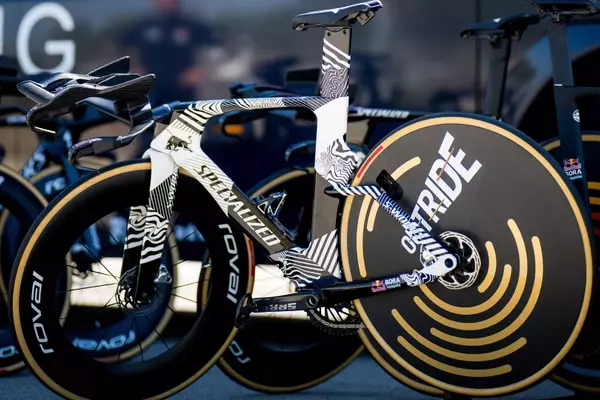
Fast forward to 2026, and Pogačar's Colnago Y1Rs is a testament to aerodynamic innovation. Designed to slice through the air, its carbon frame features an aggressive 'Defy shape' seat tube, integrated handlebars, and an 8:1 tube profile, all meticulously crafted to minimize drag. Despite being slightly heavier than some contemporary models at 7.2–7.5 kg (or 6.9kg for his time trial build), its aerodynamic advantages reportedly save 20 watts at 50km/h. Equipped with a Shimano Dura-Ace R9200 groupset, Carbon-Ti chainrings, and Enve SES wheels, Pogačar's bike showcases the relentless pursuit of speed and efficiency. The adoption of disc brakes and through-axles, alongside advanced materials like 3D-printed saddles and titanium bolts, underscore the modern era's focus on micro-optimizations that contribute to overall performance.
Reflections on Cycling's Technological Frontier
This side-by-side examination of Indurain's 1994 Pinarello and Pogačar's 2026 Colnago Y1Rs vividly illustrates the dramatic strides in bicycle technology. It highlights not just a change in materials and components, but a fundamental shift in design philosophy, driven by evolving UCI regulations and an insatiable quest for speed. From the straightforward durability of steel to the complex, wind-cheating contours of carbon fiber, each bike tells a story of its era and the challenges it aimed to conquer. As cycling continues to push the boundaries of human and mechanical performance, it's clear that innovation remains at the heart of the sport, continuously redefining what's possible on two wheels.
Related Articles
Tour de France Confronts Climate Change: EF Education-EasyPost Boss Urges Environmental Responsibility in Cycling
Mountain Bikers and Social Media: To Share or Not to Share?