Trending Searches
Exposure Boost 3: A Comprehensive Review
The Exposure Boost 3 cycling light presents a blend of superior physical construction and potent illumination, making it a viable option for cyclists prioritizing visibility and durability. However, the device's user experience is significantly hampered by its convoluted control system and a price tag that places it above many competitors offering comparable, if not superior, features. This comprehensive analysis delves into its strengths and weaknesses, evaluating its design, performance, and overall market position.
Despite its flaws, the light's compact form factor and enhanced brightness represent a notable improvement over previous models, proving effective for both urban commuting and nighttime riding. The Boost 3's robust build quality ensures resilience against the elements, a critical factor for year-round cyclists. Yet, the persistent issue of its unintuitive operation and its cost-effectiveness in a crowded market remain central to its assessment.
Design and Functionality: A Double-Edged Sword
The Exposure Boost 3 boasts a small, lightweight, and robust design, making it an attractive option for cyclists seeking an unobtrusive light. Its machining is precise, and the lens is tough, contributing to its overall durability. The light is bright enough to ensure visibility in various conditions, with a 600-lumen output in flash mode and 400 lumens in constant mode, which is genuinely useful for navigating dimly lit or completely dark areas. The 270° lens further enhances side visibility, a crucial safety feature. It is also rated IP67, signifying excellent resistance to dust and water, making it suitable for all weather conditions. However, the advanced functionality is marred by an overly complicated control scheme that requires memorizing specific button presses and interpreting flashes to change settings. This counter-intuitive interface makes on-the-fly adjustments challenging, especially when riding, and stands in stark contrast to the simpler controls found in many contemporary bike lights.
The physical design, while generally praised for its quality, features a small and stiff button that can be difficult to operate, particularly when wearing gloves. This issue is compounded by the light's tendency to rotate within its clamp when pressure is applied, making precise adjustments even harder. While the clamp itself is well-designed, offering a secure and easy attachment, the interaction with the control button is a significant drawback. The case has seen a minor cosmetic update, which offers no functional improvement. Furthermore, a noted manufacturing fault where the light's brightness would fluctuate on a solid setting indicates potential quality control inconsistencies, though such units would typically be covered under warranty. These design choices, particularly concerning user interaction, prevent the Boost 3 from fully leveraging its otherwise solid build and performance capabilities.
Performance and Value: Room for Improvement
The Boost 3 delivers a truly useful amount of light, with its 600 lumens in pulse mode and 400 lumens in constant mode providing ample illumination for various cycling environments, from urban streets to unlit country roads. Its battery life, extended to 1600mAh, offers approximately two hours of run-time at maximum power, which is respectable but can be affected by cold weather. A key limitation is the absence of a mid-range constant power setting, forcing users to choose between a powerful but short-lived high mode or significantly dimmer, longer-lasting options. This can be inconvenient for rides that transition between different lighting conditions, as the light shuts off without warning when the battery is depleted. This lack of a versatile intermediate setting, combined with the complex control system, means cyclists cannot easily optimize the light's performance for varying needs during a ride.
From a value perspective, the Boost 3, priced at £80, struggles to compete with other market offerings. Many competitors provide similar or superior lumen output, more user-friendly controls, and often a lower price point. For instance, some lights offer 600 lumens in a constant beam for significantly less, alongside better battery life on useful medium settings. While the Boost 3 does hold an advantage in its extremely small size and light weight, this niche benefit may not justify the higher cost and operational compromises for most users. The difficulty in adjusting settings on the go, the absence of a practical mid-power option, and the premium price tag collectively diminish its overall value proposition. Consequently, while the Boost 3 is a well-built light with strong illumination, its uncompetitive pricing and complex usability make it a less attractive option for those seeking a balance of performance, ease of use, and affordability.
Related Articles
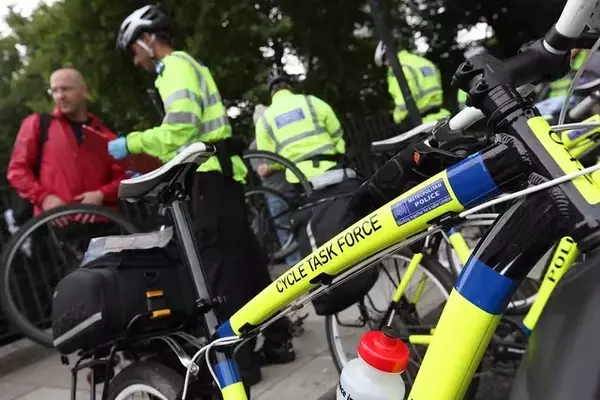
Concerns Mount as London's Metropolitan Police Disbands Specialized Road Safety Units

Revitalization of British Cycling: Innovation and Dedication Drive Growth