Trending Searches
First Impressions: The Ridley Falcn RS 2.0 – A Climbing Machine Reimagined
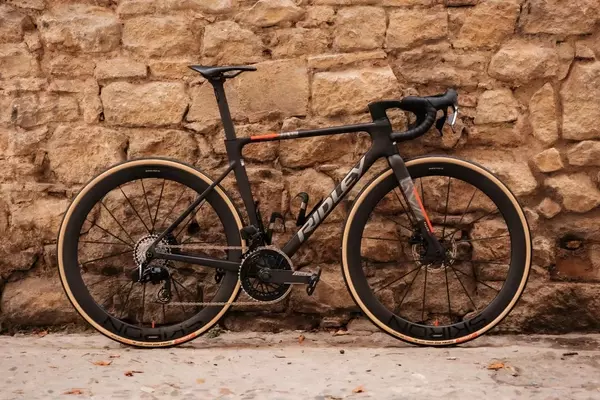
Experience the pinnacle of climbing performance: The Ridley Falcn RS 2.0
The Genesis of a Climbing Icon: From Dauphine Surprise to Autumnal Treat
Ridley unexpectedly unveiled the second iteration of its Falcn RS, a road bike designed for climbers, at the 2026 Criterium du Dauphine. Contrary to expectations of a Tour de France launch, this advanced model has arrived as a delightful surprise for cycling enthusiasts this autumn. My attendance at Sea Otter Europe in Girona provided the perfect opportunity for a covert test ride of this new bicycle.
A Distinct Design Philosophy: Balancing Aero and Ascent
Upon its initial sighting at the Dauphine, I found Ridley's approach particularly noteworthy. In an era where major manufacturers like Trek and Specialized lean towards a singular road racing platform, Ridley continues to champion a dual strategy. They offer both a full-aerodynamic option and the more balanced, lighter Falcn, reflecting their belief in specialized bikes for different demands.
The Unwavering Commitment to Specialized Performance
Ridley's representatives articulated their steadfast commitment to this two-pronged strategy. This philosophy is evident across their product range, from the Kanzo Fast and Astr RS in gravel cycling to the Noah Fast and the new Falcn RS on paved roads. This approach is rooted in Ridley's reluctance to compromise, ensuring each bike is optimized for its intended purpose without sacrificing specific performance attributes.
Engineered for Ascents: Prioritizing Climbers' Needs
The Noah Fast was conceived as a no-compromise aerodynamic machine, disregarding the UCI's minimum weight limit to achieve ultimate aero efficiency. Consequently, it proved somewhat hefty for climbers within the UNO-X World Tour team. A significant moment occurred when Torstein Træen opted for the Falcn RS during his yellow jersey day at the Tour de France, highlighting the Falcn RS's design for challenging, high-elevation stages.
Mastering the Vertical: The Falcn RS 2.0's Climbing Dynamics
While my test ride didn't involve recreating a Tour de France mountain stage, it did encompass two significant climbs, offering an ideal proving ground for a bike aimed at climbers. The Els Angels climb, with its varied terrain, presented a perfect challenge, allowing me to appreciate the bike's agility and responsiveness through steep sections and its steady rhythm on flatter stretches.
The Art of Seated Climbing: Optimized Position for Efficiency
Ridley has crafted an exceptional bike for climbers, largely due to its optimized seated climbing position. The notable 76-degree seat tube angle positions the rider effectively over the bottom bracket, reducing the need to stand during ascents. This design, combined with a measured pace, allowed for controlled and efficient climbing.
Navigating Challenges: Tyre Choices and Ride Conditions
At the summit of the initial climb, the typical press trip interlude for photographs and tire issues ensued. The road conditions, compromised by recent rain, coupled with the choice of delicate Vittoria Corsa Pro Speed tires, led to several punctures. While my 28mm tires, mounted on carbon-spoked Forza Skiron RSR rims, remained intact, questions arose among journalists regarding the suitability of time trial tires for general road use, especially given the bike's 35mm tire clearance and the apparent weight-saving focus on TPU tubes.
Beyond the Scale: Comfort in Lightweight Design
When manufacturers prioritize an ultra-low frameset weight, concerns about ride comfort often arise, with weight figures sometimes serving as a diversion. The Specialized Aethos, for instance, offered an incredibly light frameset but at the cost of a harsh ride. Ridley claims to have avoided this pitfall by reassessing and optimizing the carbon layup inside the frame, particularly in overlapping zones.
A Balanced Ride: Comfort on Challenging Surfaces
Despite weighing only 6.65kg with the Force AXS build, the Falcn RS 2.0 did not sacrifice comfort. It felt remarkably composed on Girona's less-than-perfect roads, suggesting it would be a comfortable companion for extended rides. However, a comprehensive assessment of its long-term comfort will require testing on more familiar terrain.
Conquering Descents: Stability Amidst Adversity
The day before my test ride, Girona experienced heavy rain and lightning, leaving the roads treacherous with damp corners and gravel. This, combined with my unfamiliarity with the local roads and the unconventional choice of time trial tires, made aggressive cornering inadvisable. Therefore, a full evaluation of the bike's cornering capabilities awaits a future ride.
Precision Steering and Downhill Stability: A Revelation
Despite the challenging conditions, the forward riding position, which excelled during seated climbing, also proved beneficial on descents by shifting weight towards the front wheel. This provided immediate and precise steering feedback. The bike also demonstrated impressive stability at high speeds, particularly on a long, steep descent where it effortlessly reached 75km/h. The lowered bottom bracket from the previous model undoubtedly contributed to its smooth downhill performance.
Unveiling the Speed: Bridging the Gap Between Aero and Lightness
While primarily designed for climbing, the Falcn RS 2.0 surprised with its speed on flat sections. Although it concedes approximately 10 watts to a dedicated aero bike at 50km/h, it performed admirably, allowing me to close gaps in the group. Its substantial frame stiffness and low overall weight also contributed to impressive acceleration during sprints.
Related Articles
Ridley Debuts New Lightweight, Aero-Optimized Falcn RS 2.0 Road Bike
Cycling World Reacts to 'Cask Strength Stupid' Tour de France Criticism, Bernal's Retirement Rumors, and Infrastructure Debates