Trending Searches
The Great Divide: Steep Eastern Trails vs. Winding Western Switchbacks
Navigating Nature's Challenges: East's Grit, West's Grace
The Enduring Debate: Eastern Steepness Versus Western Switchbacks
A persistent, albeit good-natured, rivalry exists within the hiking community concerning the perceived superiority of trails in the East versus the West. Online discussions and social media platforms frequently host exchanges where Eastern hikers playfully label their Western counterparts as 'switchback princesses,' while Westerners might casually dismiss the lower, undulating peaks of the East as lacking in significant challenge. This dynamic highlights a core difference in the hiking experiences offered by the two regions.
Eastern Inclines: A Historical Perspective on Steep Ascents
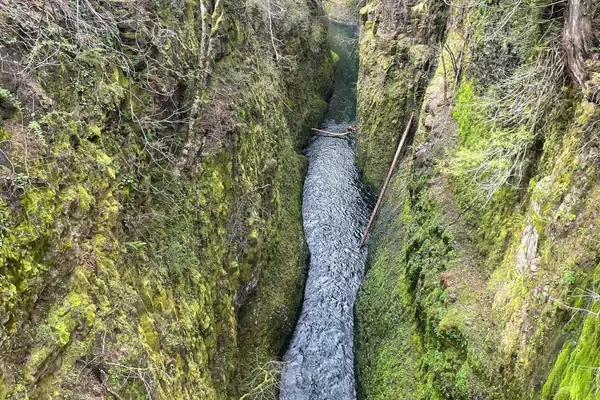
Despite the generally lower elevations of mountain ranges in the East, such as the Adirondacks and Appalachians, the trails that traverse these peaks are remarkably steep, often to an almost comical degree. Those who have hiked in the East, particularly the Northeast, can vividly recall navigating slippery gullies, relying on roots and rocks for stability. It is a commonly recognized fact among long-distance hikers that the Appalachian Trail, though shorter and lower than the Pacific Crest Trail and Continental Divide Trail, boasts a significantly higher elevation gain per mile, a testament to its demanding topography.
The Genesis of Trail Design: Property, Pack Animals, and Regional Identity
The divergent approaches to trail construction between the East and West can be attributed to a confluence of three primary factors: private land ownership, the historical reliance on pack animals, and a deep-seated regional pride. These elements collectively shaped how trails were initially conceived and subsequently evolved in each area.
Early Eastern Trails: Wilderness Appreciation and Property Constraints
During the mid-19th century, a growing appreciation for the spiritual essence of wilderness took root in America, particularly among the urban dwellers of the industrialized Northeast. Seeking respite from the clamor and grime of cities like New York and Boston, affluent individuals began flocking to the mountains. Enterprising hoteliers in regions such as the Catskills, White Mountains, and Adirondacks established lodges to accommodate these visitors. Inspired by Transcendentalist thinkers, guests sought brief, contemplative walks from their comfortable lodgings. Faced with the limitations of private property boundaries and a scarcity of labor, lodge owners opted for direct, unadorned paths leading to nearby summits and scenic vistas. This marked the inception of the steep trail tradition in the Northeast, with many of these early routes eventually integrated into the expansive trail networks seen today.
Western Trails: Frontier Logistics and Pack Animal Pathways
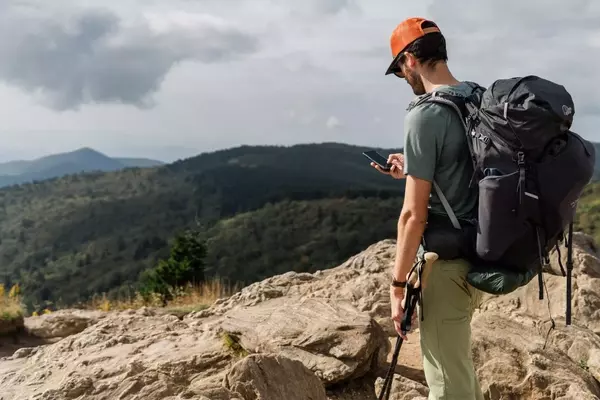
In stark contrast, the Rockies and Sierras remained a rugged frontier during this period. The allure of mining, grazing, and hunting drew a significant influx of settlers into these towering peaks, often encroaching upon indigenous territories. Given the vast distances and the necessity of transporting heavy supplies and valuable resources, pack animals—donkeys, mules, and horses—became the indispensable mode of transport. Consequently, contoured trails featuring gradual switchbacks, designed to be easily navigable by laden animals, emerged as the prevalent standard. This approach to trail design has endured in the West, continuing to define its pathways.
The Legacy of Steepness: Pride and the Rejection of Western Gradients
The persistence of steep trail construction in the Northeast, even as other regions adopted switchbacks, can be largely attributed to regional pride. Consider the case of J. Rayner Edmands, a prolific White Mountain trail builder. After visiting the Rockies in the late 1800s, he returned to New Hampshire inspired by the graded trails he observed, attempting to introduce a similar style of construction described as "always rising, but never steeply."
Edmands' Vision and its Enduring Impact on Trail Design
However, Edmands' trails were not widely embraced. Contemporaries, as noted by historians Laura and Guy Waterman in Forest and Crag: A History of Hiking, Trailblazing, and Adventure in the Northeast Mountains, viewed his creations as overly gentle, likening those who walked them to participants in a "transplanted tea party." Subsequent generations of trail builders in the region largely disregarded his methods, preferring to uphold the tradition of steep ascents. Despite this initial rejection, Edmands' insights have proven prescient. Contoured trails are now recognized for their superior water management and reduced susceptibility to erosion. Today, trail builders in the Northeast face the arduous task of fortifying older trails with stonework to combat erosion, and virtually all new trails and reroutes are meticulously planned according to the more sustainable, Western-influenced design principles.
Defining the Joy of the Journey: Steep vs. Switchback Fun
The debate over whether Eastern or Western trails are "harder" will likely persist. Perhaps a more pertinent question is: which style offers a more enjoyable experience? As a friend and fellow trail builder, Sam Walters, aptly put it, "Fun in the Northeast means hard. Fun in the West means big." "Fun," in the context of an activity that often embraces hardship and discomfort, is an inherently subjective term. Ultimately, whether one's definition of "fun" involves a challenging scramble through a lush ravine or a scenic stroll at high altitudes is a matter of personal preference, or for some, a point of regional pride.