Trending Searches
Head-to-Head: Transition Spur vs. Revel Ranger Mountain Bikes
This analysis delves into a direct comparison between two recently updated short-travel mountain bikes: the Transition Spur V2 and the Revel Ranger V3. Both models, sharing identical travel specifications of 120mm at the rear and a 130mm fork, are positioned within the versatile 'downcountry' segment. While their geometric measurements are remarkably similar, subtle distinctions in their component selections and frame characteristics indicate divergent design philosophies, with one favoring cross-country agility and the other emphasizing trail-riding robustness. This detailed examination aims to illuminate these nuances for potential buyers.
The Transition Spur, in its second iteration, maintains its 120mm rear travel while increasing its fork travel to 130mm. Transition characterizes it as a cross-country bike capable of handling downcountry challenges and regular trail duties. Conversely, the third-generation Revel Ranger sees an increase in both front and rear travel from its predecessor, now also at 120mm rear and 130mm front. Revel describes the Ranger as a "true downcountry tool" that offers the climbing efficiency of an XC bike with the descending prowess of a longer-travel machine.
Despite their shared travel numbers, the two bikes demonstrate different philosophies in their componentry. The Spur comes equipped with a lighter Fox 34 SL fork, faster-rolling Maxxis Forekaster tires, DT Swiss XR 1700 wheels, and 180mm brake rotors. This configuration points towards a cross-country-oriented setup, prioritizing speed and climbing efficiency. In contrast, the Ranger features a more robust RockShox Pike fork with thicker stanchions, grippier Maxxis Dissector tires, Crank Brothers Synthesis Enduro alloy wheels, and a larger 200mm front brake rotor, indicating a bias towards aggressive trail riding and descending performance. These choices highlight the slightly varied intentions of each brand, even within the same travel category.
A critical point of divergence lies in their suspension designs. The Spur utilizes a flex-stay rear end, foregoing a pivot near the rear axle. This design, which relies on the slight flex of the seatstays, reduces weight and maintenance by eliminating a set of bearings. Transition aimed to preserve the lively and responsive feel that characterized the original Spur. The Ranger, however, employs Revel's CBF (Canfield Balance Formula) suspension, a dual-link system. For its latest version, Revel refined the CBF kinematics to be more progressive, aiming for a supple initial feel, strong mid-stroke support, and excellent bottom-out resistance. The choice between these two designs often comes down to rider preference: those seeking a simpler, lighter frame might favor the Spur's flex-stay, while riders who appreciate the specific feel and tuning capabilities of multi-link systems may prefer the Ranger's CBF.
Geometrically, the bikes are remarkably similar. In a size large, both bikes feature an identical 485mm reach. Minor differences exist in stack height, wheelbase, and chainstay lengths, which are largely scaled with frame size. The Spur offers a flip chip at the lower shock mount, allowing riders to adjust the head tube angle by half a degree and the bottom bracket height by 7mm, offering greater versatility in handling. The Ranger, while lacking a flip chip, offers slightly different sizing at the extremes, potentially suiting shorter or taller riders better. Both bikes are carbon-only, feature internal cable routing, 73mm threaded bottom brackets, and SRAM UDH compatibility. The Spur includes in-frame storage, while the Ranger prioritizes multiple bottle mounts. The Ranger also accommodates wider tires (29x2.6" vs. 2.4" on the Spur) and larger brake rotors, further solidifying its trail-oriented leanings.
The Transition Spur and Revel Ranger, despite their numerous similarities, cater to distinct preferences within the downcountry mountain biking sphere. The Spur, with its flex-stay suspension, geo-adjust feature, and lighter build, is ideal for riders who prioritize cross-country speed and efficiency but still demand capable handling on technical terrain. Conversely, the Ranger, with its robust CBF suspension, more aggressive component choices, and larger tire/brake capacity, is better suited for those who lean towards trail riding and prioritize downhill performance and stability. The price difference also plays a role, with the Ranger offering a comparable build at a lower cost, making it an attractive option for value-conscious buyers. Ultimately, the choice hinges on individual riding style, maintenance preferences, and budget.
Related Articles
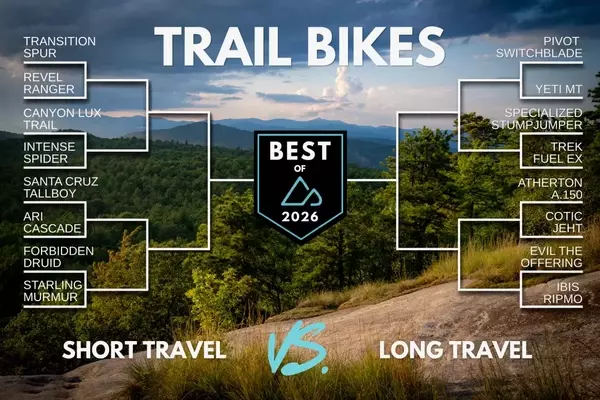
Singletracks Announces 2026 Trail Bike of the Year Tournament Brackets
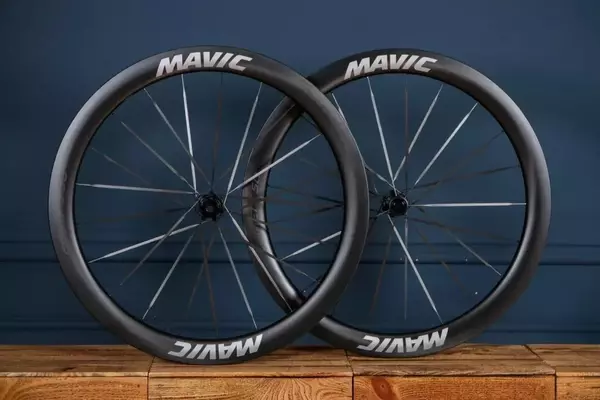
Mavic Comete 50 Wheelset Review: Performance, Aesthetics, and Versatility