Trending Searches
Mastering Inshore Fishing: Unlocking the Secrets of Inside Corners
Coastal fishing success often hinges on understanding the subtle nuances of marine environments. While many anglers focus on popular structures like bars and rips, an expert fisherman, Jerry Audet, highlights the immense, yet frequently ignored, potential of "inside corners." These unique shoreline formations, where the coast curves inward into a shallower area, are revealed to be dynamic zones that manipulate water movement, creating ideal conditions for predatory fish. Audet's extensive experience demonstrates that by recognizing and exploiting the specific current accelerations, decelerations, and swirling eddies within these corners, anglers can significantly enhance their catch rates. The article emphasizes the importance of studying the shoreline, especially during low tide, to identify these often-unmarked but highly productive locations. Whether in sandy beaches, rocky shores, or estuaries, inside corners, with their unique current dynamics and bait-trapping abilities, offer a consistent advantage for those willing to look beyond the obvious fishing spots.
Unlocking the Potential of Inshore "Inside Corners" for Angling Success
In a detailed exposition published on February 21, 2026, seasoned angler Jerry Audet illuminated the often-underestimated efficacy of targeting "inside corners" for successful inshore fishing. Audet's insights, gleaned from years of exploring local and distant waters, pinpointed these distinctive shoreline curvatures as prime locations for abundant catches, frequently outperforming more conventional fishing spots. An inside corner is characterized by a shoreline that bends outward into a shallower extension, such as a point, curve, or hump. Audet vividly describes this formation using the analogy of a bent arm, where the "crook" of the elbow represents the deeper water within the corner, and the forearm extends into the shallower point.
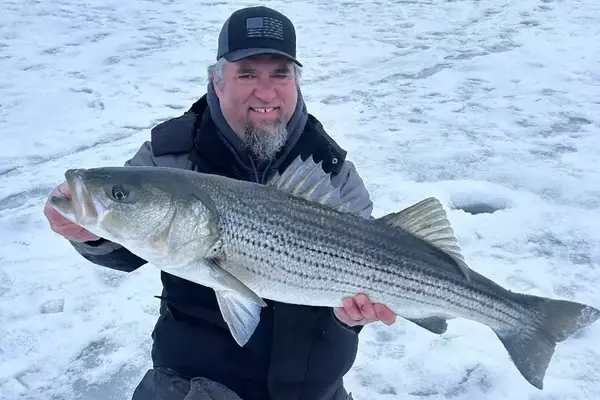
These corners are critical because they significantly alter water movement. Depending on the prevailing winds and tidal currents, they can either accelerate or decelerate water flow and even redirect it. This dynamic environment proves advantageous for predatory fish, as the altered currents can disorient or trap baitfish and crustaceans. Audet provides two compelling scenarios: in the first, a tidal current accelerating over a shallow point sweeps prey into the deeper, calmer water of the corner, rendering them vulnerable. In the second, a current pushing into the corner creates high pressure and chaotic, swirling currents, effectively trapping bait. Such conditions concentrate prey, making these corners irresistible to predators like striped bass, drum, snook, and tarpon.
Finding these productive spots requires keen observation. Audet advises anglers to search for inside corners during low tide, when the subtle contours of the shoreline are more visible, as they are often too nuanced to appear on standard nautical charts. While transient on sandy beaches, stable rocky or structured shorelines, as well as estuaries and tidal rivers, offer more reliable and consistently productive inside corners.
Audet also emphasizes focusing on the "three edges" of an inside corner: the shoreline, the transition to the point, and the less obvious "open side" where current dynamics become particularly complex. He specifically highlights the importance of "escape currents" – small, often invisible, but surprisingly strong currents that cut through the main flow, created by the interaction of wind, tide, and the corner's shape. These escape currents act as concentrated feeding lanes, attracting predators. Anglers are encouraged to meticulously work these areas, casting across the current and allowing the lure to swing naturally, mimicking trapped prey.
The article underscores that the most effective approach to fishing inside corners depends on various factors, including the specific dimensions of the spot, target species, and environmental conditions. However, the consistent principle remains: identify where the water behaves differently and fish there.
The deep dive into the dynamics of inshore "inside corners" presented by Jerry Audet offers a compelling shift in perspective for anglers. It serves as a potent reminder that understanding the intricate relationship between shoreline topography and water movement is paramount to unlocking hidden fishing potential. This detailed analysis encourages us to move beyond conventional wisdom and embrace a more analytical, observant approach to fishing. By meticulously studying the seemingly minor curvatures of the coast, identifying the subtle yet powerful alterations in current, and recognizing where bait is naturally funneled and trapped, we can transform previously overlooked spots into highly productive havens. Audet's insights challenge us to sharpen our observational skills and embrace the scientific principles at play in marine environments, ultimately leading to a more rewarding and successful angling experience. It's a call to observe, learn, and adapt, proving that true mastery often lies in appreciating the nuances that others might miss.