Trending Searches
Mountain Biking Evolution: A Look Back at the 1994 NORBA Race
Unveiling Mountain Biking's Past: A Tale of Two Eras
Recalling the 1994 NORBA Cross-Country Race and Its Lasting Impressions
A recently uncovered video from the 1994 NORBA Championship Series men's cross-country mountain bike race in Helen, Georgia, sparked profound observations. Beyond the era's questionable broadcasting styles, the stark contrast between that race and today's mountain biking landscape was immediately apparent.
The Evolution of Mountain Biking: From Early Days to Modern Spectacle
From the early bicycles to the intricate race routes and the techniques employed by professional riders, every aspect of mountain biking has undergone significant change. However, beneath these transformations, an essential element of the sport remains constant.
Outdated Equipment: The Humorous Limitations of Vintage Bicycles
The footage reveals elite riders like John Tomac, Tinker Juarez, and Dave Wiens grappling with challenging, root-strewn, and rocky terrains on hardtail bikes. The absence of full suspension and minimal fork travel, often less than 100mm, made descents a punishing experience. The narrow, high-pressure tires, reminiscent of today's gravel bike tires, further compounded handling difficulties, leading to bikes skittering over rough patches. The smaller 26-inch wheels contributed to bikes appearing disproportionately small for riders by current standards, alongside narrow handlebars and compact wheelbases. The widespread use of double or triple chainring drivetrains also stands in contrast to contemporary setups.
Modern Innovations: How Technology Revolutionized Mountain Bike Performance
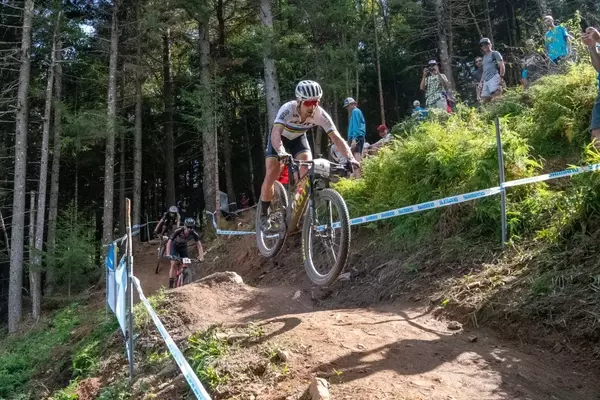
Today's mountain bikes boast 100-120mm or more of suspension travel, high-volume tires, and advanced geometry, which have dramatically increased cross-country race speeds. Canyon's observation that professional XC race speeds have climbed by 33% over the last decade underscores the profound impact of these technological advancements. Yet, alongside these improvements, race courses themselves have also seen considerable changes.
The Enduring Debate: Defining Technicality in Cross-Country Race Courses
The question of whether modern cross-country race courses are more or less 'technical' is a subject of ongoing debate. In 2018, Singletracks' Matt Miller suggested an increase in technicality, attributing it to the desire to engage television audiences and leverage the capabilities of contemporary bikes. However, three-time Olympian Geoff Kabush challenges this notion, arguing that while courses feature more obstacles, they aren't necessarily more technically demanding, particularly in adverse weather conditions.
The Shift Towards Man-Made Features Versus Natural Terrain in Race Tracks
This perspective points to a trend where modern courses increasingly incorporate purpose-built, man-made features over natural terrains. The 1994 Helen course, in stark contrast, was untamed. Its challenging nature is exemplified by a stream crossing that riders often opted to run through due to safety and environmental concerns, an element unthinkable in today's professional races. A subsequent trail guide even rated the course a "triple black diamond," signifying extreme difficulty.
Navigating Obstacles: The Evolution of Riding Techniques in Cross-Country Racing
Penny Davidson's commentary in the video highlights a "hike-a-bike" section—a steep, technical descent where riders were forced off their bikes. While this suggests the course's immense challenge, modern courses also feature demanding elements. Today's XC tracks include jumps, rock gardens, and root drops, designed to create visually engaging moments, though they may not test rider endurance in the same manner as sustained climbs or lengthy technical sections of yesteryear.
Comparing Race Formats: Shorter Distances and Enhanced Spectator Appeal
Contemporary XC races are notably shorter in duration and distance, often attributed to the push for more spectator and television-friendly formats. Unlike some NORBA races that extended over 30 miles and nearly three hours, today's professional XC events typically conclude within 90 minutes and cover less than 20 miles.
Refined Riding Styles: From Grinding Gears to Smooth Suspension
Another striking observation from the 1994 NORBA video is the riders' high-gear, low-cadence pedaling, particularly on ascents. The frequent dismounting and cyclocross-style navigation of steep sections hint at suboptimal gearing for the course. Notably, the video shows no wheels leaving the ground, a stark contrast to modern riding characterized by sophisticated suspension and high-volume tires that enable smoother, more controlled movements.
The Unchanging Heart of Mountain Biking: Enduring Enthusiasm and Dedication
Despite all the advancements, the intrinsic passion for mountain biking remains undimmed since 1994. The enthusiasm of the crowds and the intense determination of racers battling to the finish line are as palpable now as they were then. While mountain biking has undoubtedly transformed, its core spirit endures. Efforts are underway to revitalize parts of the original Helen NORBA course, prompting thoughts of revisiting these historic trails, albeit not on a vintage 1990s mountain bike.