Trending Searches
Redesigned Van Rysel RCR-Pro Spotted at Criterium du Dauphine
An updated iteration of the Van Rysel RCR-Pro bicycle has been sighted at the Tour Auvergne-Rhône-Alpes, suggesting that French cycling talent Paul Seixas is slated to ride a new, lightweight aero machine for the Tour de France. This redesigned model represents a significant evolution in Van Rysel's acclaimed RCR series, known for its blend of aerodynamic efficiency and minimal weight, and is poised to challenge leading all-rounder bikes in the professional peloton.
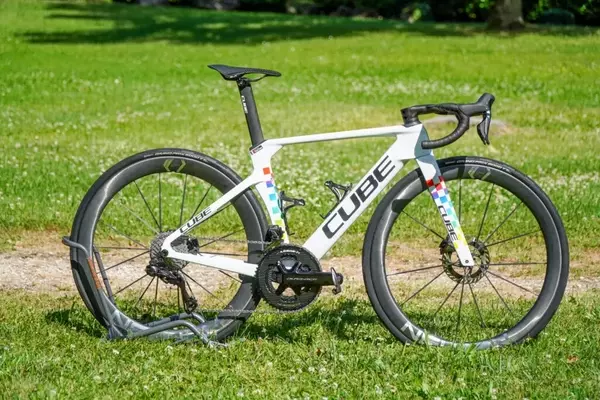
The week-long French stage race, previously recognized as the Criterium du Dauphine, has once again served as a platform for unveiling new cycling technology. Following Cube's teaser of an aero prototype, Van Rysel has now showcased its enhanced RCR-Pro. The original RCR gained considerable popularity for its aerodynamic tube shapes, lightweight construction, and commendable performance, all offered at a relatively accessible price point within the professional cycling world.
However, the brand's dedicated aero model, the RCR-F, had somewhat overshadowed the standard RCR in recent times. The latest RCR-Pro aims to reclaim attention by artfully combining a deeply aerodynamic front section with a notably slimmer rear tube set. This innovative design approach positions the bike as a formidable contender against top models like Specialized's Tarmac, striving for excellence as a lightweight, all-encompassing aerodynamic race machine.
Upon closer inspection, the most apparent modifications are concentrated at the bike's front. The head tube now closely resembles that of the RCR-F, featuring additional material along its rear edge. This, coupled with a prominent shroud positioned behind the stem, gives the front end a distinctly aggressive and aerodynamic profile. Interestingly, a direct comparison suggests that the new RCR-Pro might integrate the existing carbon Deda handlebar from the RCR-F.
Further down, the fork exhibits a pronounced taper towards the front axle. This design choice is likely a strategic effort to balance advanced aerodynamic optimization at the leading edge with the imperative of maintaining a low overall weight. Such a lightweight construction would be crucial for the bike's effectiveness in mountainous stages. The down tube also features extensive sculpting, initially narrow behind the fork crown before widening to provide optimal shielding for the front water bottle.
Conversely, the rear of the bike is where significant weight reductions have been implemented. It boasts a re-envisioned seat tube that seamlessly extends from the bottom bracket. A clear shift in its trajectory moves it away from the rear wheel just before it connects with the seat stays. These comprehensive alterations lead to an intriguing question regarding how the new all-rounder RCR-Pro will compare in speed to the specialized RCR-F. Given the substantial investment in its development, the pricing strategy for this new Van Rysel model will undoubtedly be a point of considerable interest. If Van Rysel manages to maintain a reasonable price point, the RCR-Pro has the potential to emerge as an exceptionally popular and competitive alternative to established models such as the Specialized Tarmac.