Trending Searches
Rethinking Bass Fishing: A Call for Selective Harvest
The traditional "catch-and-release" philosophy in bass fishing, long revered by anglers, is facing a significant re-evaluation. A thought-provoking movement, spearheaded by prominent fishing influencer Oliver Ngy and supported by scientific research, suggests that the relentless return of every bass to the water might be paradoxically harming fish populations. This perspective advocates for a more strategic approach: selective harvesting. The core argument is that in many water bodies, an overabundance of bass can lead to intense competition for food, resulting in stunted growth and an overall decline in the health and size of the fish. This article explores how this seemingly counterintuitive idea challenges ingrained practices and emphasizes the ecological benefits of responsible, managed removal of certain fish, ultimately aiming for a more robust and balanced aquatic ecosystem.
Details of the Angling Ethos Reassessment
In a provocative move that captured the attention of the angling community, Oliver Ngy, a renowned bass fishing personality known for his pursuit of trophy-sized largemouths, ignited a heated discussion through an Instagram reel. The video, set to melancholic music, depicted Ngy roasting a 4-pound largemouth bass and feeding its flesh to his dogs, a scene deliberately designed to challenge the deeply ingrained catch-and-release culture. Ngy clarified that his intention was not mere provocation, but a bold statement on the deteriorating state of bass fisheries.
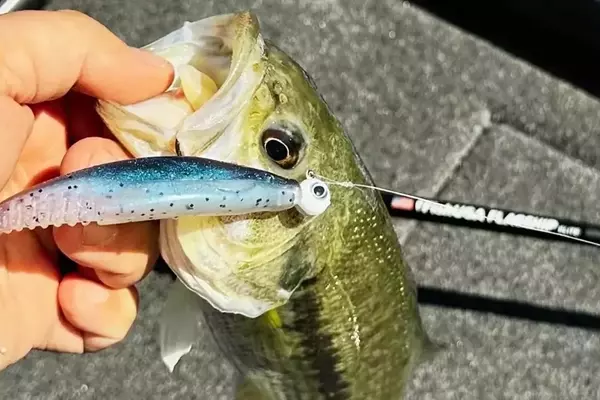
His central contention, backed by a growing consensus among fisheries biologists like Shawn Good of the Vermont Fish & Wildlife Department, is that the current catch-and-release dogma, while well-intentioned, has led to unintended consequences. Good explained that while early tournament fishing caused harm by removing large numbers of big fish, the pendulum has now swung too far in the opposite direction. The universal practice of releasing all bass, particularly the smaller ones, is inadvertently creating overcrowded environments. In such closed systems, an excess of bass competing for limited food resources leads to a population of stunted, unhealthy fish, effectively preventing them from reaching their potential trophy sizes.
Ngy's observations in California mirror these scientific findings. He noted a marked decline in the number of truly giant bass in historical trophy lakes, a stark contrast to the abundant populations of the 1990s. A recent survey on Puddingstone Lake, conducted with the California Department of Fish & Wildlife, further solidified this concern. Despite a large number of fish being sampled, including many over 15 inches, only a tiny fraction exceeded six pounds, indicating a widespread stunting issue.
Shan O'Gorman, a Georgia-based aquatic biologist with three decades of experience in managing private lakes, reinforces this sentiment. He asserts that fish populations can suffer from over-spawning and overcrowding, and that controlled harvesting is essential for maintaining a healthy balance. O'Gorman, who is renowned for his ability to cultivate large fish in private waters within just a few years, attributes his success to meticulously managed ecosystems where specific food chains are established and maintained. He laments that many anglers, misinformed by commercial hatcheries and popular opinion, often undermine scientific management by introducing unsuitable species, further disrupting delicate ecological balances.
The issue is compounded by the lack of enthusiasm for consuming bass, which many anglers claim do not taste good. This perception, even if inaccurate (as evidenced by the rising market demand for farm-raised largemouths in Florida), removes a natural incentive for harvesting. Furthermore, the practice of "bucket biology"—illegally stocking bass in new waters—exacerbates the problem, introducing invasive species and disrupting native ecosystems, as frequently observed by Good in Vermont. The unintended consequences of human intervention, both through strict catch-and-release and unregulated stocking, are pushing bass fisheries towards an unhealthy imbalance. Correcting these issues, as O'Gorman points out, often requires drastic measures like completely resetting a fishery, a solution rarely feasible for public waters.
A Paradigm Shift for Sustainable Fishing
This discussion around bass fishing fundamentally challenges the deeply embedded ethical and practical foundations of the sport. It compels us to move beyond sentimental attachment to the catch-and-release ideal and embrace a more nuanced, ecologically informed approach. The core insight is that nature, left entirely to itself in contained environments, does not always self-regulate to produce optimal outcomes for all species. Human intervention, in the form of selective harvesting, when guided by robust scientific understanding, can serve as a vital tool for ecosystem management, promoting healthier and more resilient fish populations. This perspective encourages anglers to see themselves not just as participants in a sport, but as stewards of aquatic ecosystems, whose choices have tangible, long-term impacts on the very resources they cherish. It's a call for a paradigm shift, where informed decision-making and a willingness to adapt traditional practices become paramount for the future of sustainable fishing.