Trending Searches
Road Bikes Reign Supreme at Strade Bianche: Why Gravel Machines Take a Backseat
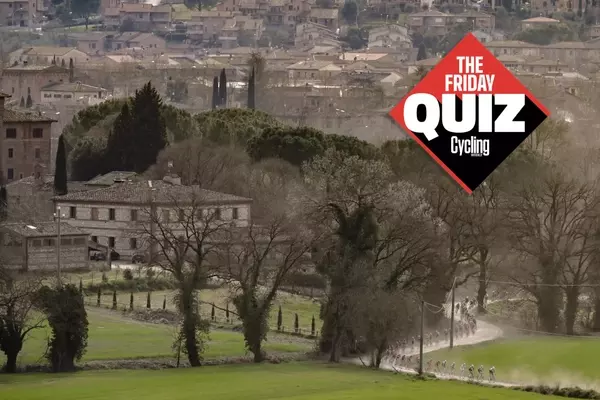
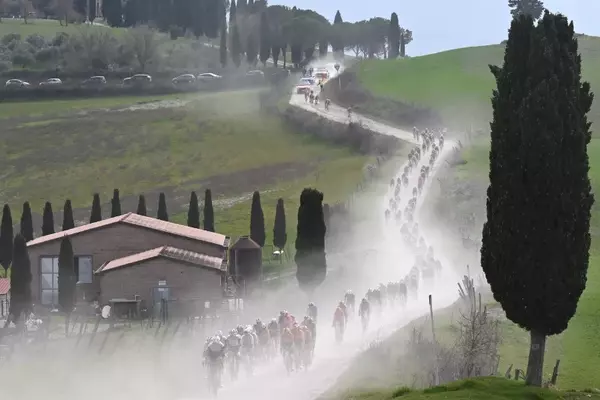
As the iconic Strade Bianche race unfurls across Tuscany's picturesque landscape, clouds of white dust will once again signal the intense competition. Despite significant portions of the course comprising unpaved gravel and chalky white clay, reminiscent of dedicated gravel cycling events, the professional peloton consistently chooses conventional road racing bicycles.
This preference for road bikes, even on demanding off-road sectors, is primarily dictated by the race's inherent characteristics. The Strade Bianche route is not exclusively gravel; approximately two-thirds of the course is paved. On these tarmac stretches, riders achieve exhilarating speeds, often exceeding 50 km/h, making aerodynamic efficiency a critical factor. Furthermore, the race features numerous ascents, including the arduous final climb into Siena's Piazza del Campo, where minimizing bike weight becomes paramount. These factors collectively highlight why lightweight and aerodynamic road frames, such as the Specialized S-Works Tarmac SL8, are favored over their gravel counterparts, even with the occasional appearance of endurance-focused models like the Specialized Roubaix. While a few riders might experiment with gravel-specific frames that offer wider tire clearance, the performance differences on mixed terrain often prove negligible, suggesting that marketing considerations might sometimes influence such choices.
Nevertheless, the evolving landscape of cycling technology shows a gradual convergence between road and gravel disciplines. Modern road bikes are increasingly incorporating features traditionally found in gravel setups, particularly in tire clearance, allowing for wider, lower-pressure tires (e.g., 30mm or 32mm) that offer improved comfort and grip on varied surfaces. Although dedicated gravel race bikes are becoming faster and lighter, they still generally carry a weight penalty and feature geometries optimized for control rather than aggressive aerodynamic positioning or rapid handling on technical climbs. The delicate balance of speed, weight, aerodynamics, and handling continues to position high-performance road bikes as the optimal choice for Strade Bianche. However, future developments in gravel bike technology or potential modifications to the race course could eventually shift this dynamic, leading to a more prominent role for gravel-specific machines in this unique event.
The bikes battling for victory amidst the dust this weekend are a testament to how far cycling technology has advanced. These are not merely traditional road bikes; they are highly adaptable, incredibly capable, remarkably comfortable, and astonishingly fast machines, far surpassing the wildest imaginations of cyclists just two decades ago. Their evolution showcases a blend of design influences, reflecting elements of gravel, cyclocross, and classic road racing DNA, making them perfectly suited for the challenging and diverse terrain of Strade Bianche.