Trending Searches
The Silent Battle: Motorcycles' Impact on Pro Cycling Dynamics
The Unseen Tailwind: How Race Motorcycles Skew Competition
The Growing Problem of Motorcycle Presence in Grand Tours
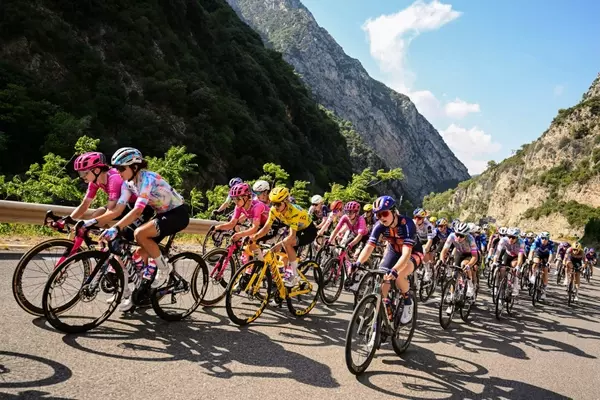
During the recent Tour de France, two-time champion Jonas Vingegaard publicly expressed his irritation towards a television motorbike, highlighting a recurring issue. An incident during stage five, where Vingegaard was recovering from a bike change, underscored how the sheer volume of motorcycles—sometimes exceeding 100 per stage for cameras, police, and support—can envelop the peloton. This dense presence, while essential for broadcasting multiple angles, inevitably leads to conflicts, poses safety risks, and fundamentally changes race aerodynamics, prompting widespread concern among athletes.
Athlete's Perspective: The Unfair Advantage
Toms Skujiņš of Lidl-Trek articulated the prevalent sentiment: “It would be nice not to worry about it, but it’s a big problem, for sure.” The core issue, now more pronounced than ever, is the aerodynamic benefit cyclists gain from drafting behind these vehicles. This isn't an occasional occurrence but a consistent factor in every stage, where camera bikes often position themselves just ahead of breakaways or the main group, creating a potent slipstream that can determine the race's outcome.
Scientific Validation of Aerodynamic Impact
A 2020 study by engineering professor Bert Blocken at Heriot-Watt University revealed that a motorbike merely 10 meters in front of a cyclist can reduce drag by 23%, translating to an 8.9% speed increase—equivalent to 5.4 seconds per kilometer. This substantial advantage makes it considerably harder to catch a rider benefiting from it, or conversely, allows the peloton to close gaps more swiftly. The Union Cycliste Internationale's (UCI) rulebook vaguely states that motorcycles must operate without disturbing race functioning and should not provide a draft, yet it fails to specify clear distances, rendering the rule ineffective.
The Unwritten Rule and its Frequent Disregard
While an unwritten rule suggests keeping motorcycles beyond 10 meters from racers, this guideline is routinely ignored. Drafting just five meters behind a motorbike can add 15 seconds per kilometer to a rider's speed—a game-changing advantage. Blocken's research further showed that even at 30 meters, riders gain 2.7 seconds per kilometer, and at 50 meters, 1.6 seconds. His subsequent study confirmed that camera bikes, being less aerodynamic due to two upright occupants, can offer even greater benefits than cars, solidifying the community's concern that motorcycle drafting critically impacts race results.
Riders' Experiences and the Call for Accountability
George Bennett of NSN, a seasoned Tour de France participant, described the sensation of drafting a moto as effortless speed, noting how even minor gains in speed or power significantly affect results in such a precise sport. He highlighted instances in Italian races and the Giro d'Italia where motorcycle proximity drastically altered race dynamics. Bennett firmly places the responsibility on motorbike operators, emphasizing that riders are naturally inclined to capitalize on any advantage. He recalled stories of cyclists befriending motorbike drivers to gain a competitive edge, underlining the systemic nature of the problem.
Potential Solutions and Regulatory Challenges
Addressing this issue requires innovative solutions. Suggestions range from equipping motorcycles with "distance bubble" lasers, promoting side-on filming (though still aerodynamically impactful), to using drones. The most favored proposal is a mandatory minimum distance of 25 meters. However, Blocken acknowledges the challenge of maintaining effective camera coverage at greater distances. He advocates for enforcing a 30-40 meter distance, leveraging advanced camera technology, and critically, reducing the number of motorcycles allowed in close proximity to racers. Despite Blocken's ongoing collaboration with the UCI, and a recent extension of team car distances in time trials, the enforcement in road races remains lax. Riders like Skujiņš lament that complaints to race officials often result in temporary compliance before the problem recurs, underscoring the urgent need for consistent education and rigorous enforcement to safeguard the integrity of professional cycling.