Trending Searches
Tour de France Femmes TV Coverage Criticized for Insufficiency
The television broadcasting of this year's Tour de France Femmes avec Zwift has drawn considerable critique from athletes and team management, who have labeled the restricted airtime as "disappointing," "odd," and "unfortunate." Out of the nine planned stages, only two—stage five from Mâcon to Belleville-en-Beaujolais and the concluding circuit around Nice—received complete, live coverage, leaving extensive portions of the other seven stages untelevised.
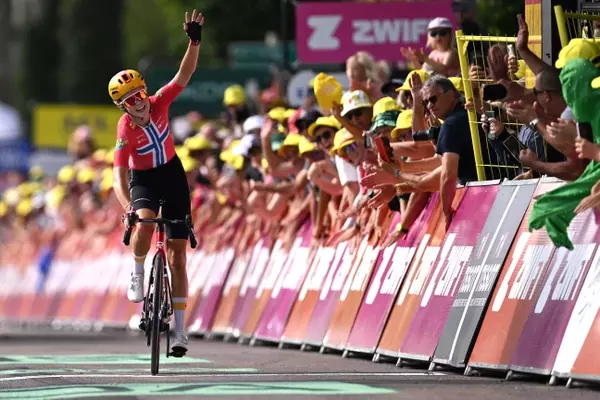
A prime example of this issue occurred on a recent Monday when Uno-X Mobility cyclist Sigrid Haugset initiated a decisive attack an impressive 88 kilometers from the finish line, ultimately securing the longest solo victory in the race's history. This pivotal moment, however, unfolded before the cameras began rolling, meaning viewers missed the initial seven minutes of her breakaway. Even Haugset herself downplayed the intensity of her move, describing it as a gradual separation rather than a sudden burst. Nonetheless, fellow riders voiced stronger opinions, with Paula Blasi of UAE Team L’IMAD emphasizing that thorough broadcasting is crucial for audience engagement. She highlighted the unpredictable and often more engaging nature of women's cycling compared to men's races, lamenting that these thrilling moments are frequently unseen.
Ahead of this fifth iteration of the Tour de France Femmes, The Cyclists’ Alliance (TCA), an organization representing women in the peloton, had already cautioned that incomplete coverage would lead to audiences missing crucial attacks, strategic plays, and race-defining moments. TCA reiterated their stance, stating that for the pinnacle event in women's cycling, partial broadcasts are simply no longer acceptable, especially given the undeniable demand for the sport. They also referenced earlier criticisms regarding the limited live broadcast of Paris-Roubaix, which they deemed a "significant insult to women's cycling." The current Tour de France Femmes offers approximately 26 hours of live broadcast across nine stages, averaging about two and a half hours daily, a stark contrast to the men's race, which enjoys full, moment-by-moment coverage for its entire 21-day duration.
Carmen Small, sports director for EF Education-Oatly, expressed her bewilderment at the continued partial coverage, particularly for a shorter, nine-stage event. She underscored the vital role of television exposure for teams in showcasing their sponsors and achieving visibility. Similarly, Josie Nelson of Picnic PostNL believes that for such a high-profile event, organizers should aim for more comprehensive coverage, especially when critical race developments occur early on. A notable incident missed by cameras was a crash involving GC favorite Demi Vollering of FDJ United-Suez, which happened 55 kilometers before the broadcast started. Although the race organizer, ASO, later shared a mobile phone video of the aftermath, it underscored the inadequacies of the live broadcast. Despite some improvements noted by Stephen Delcourt, Vollering’s team manager, who acknowledged ASO's efforts in expanding the race, he still advocates for full coverage, recognizing the need for patience while emphasizing the beauty of the early race segments. As the Tour de France Femmes progresses, calls for uninterrupted, start-to-finish coverage remain a central theme, with advocates asserting that the sport's quality and audience merit complete live broadcasts.
The evolving landscape of women's cycling demands and deserves complete media exposure. Just as the athletes push their limits on the road, broadcasters must match that dedication by providing comprehensive coverage. This not only recognizes the talent and hard work of these competitors but also inspires new generations of cyclists and fans, fostering growth and equity within the sport.
Related Articles
Praxis G2 Brodium SL Flat Pedals: A Review for Trail and Enduro Riders

The Unstoppable Rise of Sigrid Haugset: From Injury to Tour de France Femmes Glory