Trending Searches
The Unprecedented Speed Surge in the Tour de France: A New Era of Cycling Performance
The 2026 Tour de France witnessed an extraordinary display of speed and endurance, culminating in Tadej Pogačar's fifth career title and setting a new record for the fastest edition in the race's history. This remarkable acceleration in performance has sparked widespread discussion within the cycling community, prompting questions about the underlying causes, potential safety risks, and the integrity of the sport in an era of unprecedented speeds. From technological advancements to evolving training regimes and nutrition strategies, a confluence of factors appears to be driving this rapid transformation.
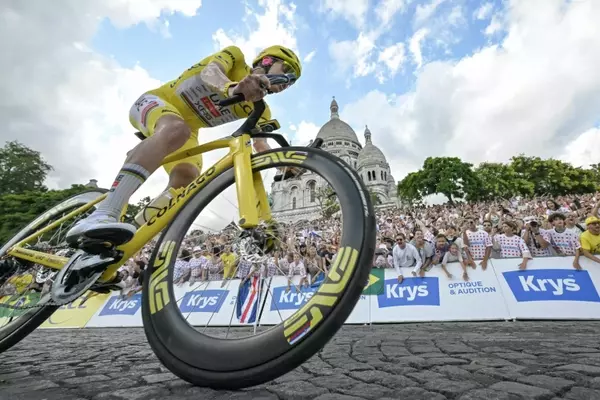
Tadej Pogačar's record-breaking ascent of Alpe d'Huez was a pivotal moment in the 2026 Tour. On a Friday afternoon, amidst a roaring crowd of 600,000 spectators, Pogačar shattered Marco Pantani's 1995 climbing record, completing the iconic 13.8km climb in just 35 minutes and 27 seconds – an astounding 1.05 minutes faster than "Il Pirata's" benchmark. This achievement was not an isolated incident; Pogačar also established a new record for the Col du Tourmalet two weeks prior, besting his own 2023 time by over two minutes. His power output during the Alpe d'Huez climb was estimated at an astonishing 7 watts per kilogram, dwarfing the 5.86 w/kg average of four-time Tour winner Chris Froome during his 2013 Alpe d'Huez performance.
The record-setting pace was not limited to Pogačar. The 2026 Tour saw Søren Wærenskjold of Uno-X achieve the fastest road stage in Tour history, averaging 50.91 kilometers per hour over 161.3 kilometers. Additionally, four of Pogačar's rivals, Remco Evenepoel, Isaac del Toro, Paul Seixas, and Matthias Skjelmose, joined him in the top 15 all-time best ascents of Alpe d'Huez. The overall average speed of the 2026 Tour de France reached an unprecedented 43.326 kph over its 3,321 kilometers, surpassing the previous year's record by 0.5 kph. This collective surge in speeds has led experts to attribute the phenomenon to several key areas.
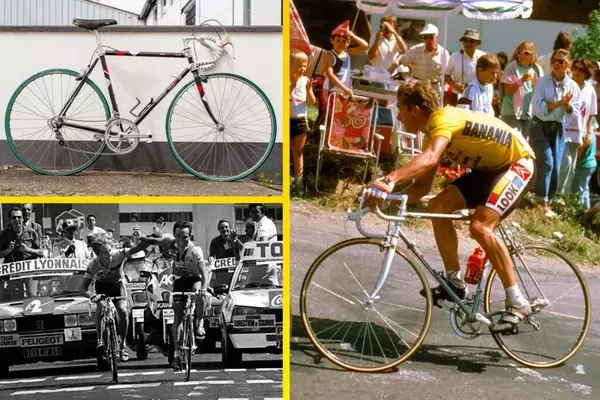
UAE Team Emirates sports director Matxin Fernández and team principal Mauro Gianetti highlighted the significant role of technological improvements. They explained that modern bicycles, tires, helmets, clothing fabrics, and frames have undergone immense quality enhancements, particularly in the last five years. However, Filippo Galli, lead engineer at Colnago, UAE's bike sponsor, suggested a reciprocal relationship: increasing peloton speeds are pushing bike manufacturers to innovate, rather than technology solely driving speed. Furthermore, a 2024 comparison by Cyclesetforme between Pogačar's and Pantani's bikes on Plateau de Beille indicated that while modern bikes offer a wattage advantage, it alone cannot fully account for the dramatic difference in performance on longer, lower-speed climbs.
Beyond equipment, Gianetti emphasized advancements in training and nutrition. He noted that contemporary training systems are more effective, and riders are now properly fueled, a stark contrast to past practices where riders often under-ate. The current generation of riders also displays an aggressive, attacking race style from the outset, contributing to higher sustained speeds. Steven de Jongh, sports director at Lidl-Trek, concurred, adding that the fierce competition among teams, combined with optimized cooling strategies, further elevates the pace. Geraint Thomas, a 2018 Tour winner, observed that the overall standard of riders across the peloton has improved significantly, leading to a deeper pool of talent and intensified competition.
However, the escalating speeds raise concerns about rider safety. Michael Storer of Tudor Pro Cycling admitted his surprise at the relentless pace, stating that even on moderate gradients, the speeds were unexpectedly high. He suggested that a post-COVID reset in 2020 allowed teams to recalibrate their approaches, leading to the current speed increases. Storer also pointed out that the pursuit of aerodynamic gains has inadvertently made racing more hazardous. He proposed that governing bodies should consider setting limits on certain components, similar to bike weight regulations, to mitigate risks. He believes that a minor reduction in average speeds, perhaps by 2 kph, would not diminish the spectacle for fans but would significantly enhance safety for riders.
The backdrop to this fastest-ever Tour was a doping controversy involving out-of-hours testing. Riders, including Pogačar and Jonas Vingegaard, underwent tests outside the usual 6 AM to 11 PM window, prompting debate about their necessity and impact. While the UCI defended these tests as crucial for anti-doping efforts, some, including Pogačar, found them disruptive. Mauro Gianetti, a rider from the EPO era who denied using banned substances, acknowledged the importance of following rules. The Movement for Credible Cycling (MPCC), an anti-doping group, supported targeted testing to assess the sport's current state, acknowledging the ongoing challenge of closing loopholes in the anti-doping system. Emily Brammeier, MPCC's head of communications, stressed the need for full credibility in the anti-doping framework to address lingering skepticism among fans and stakeholders.
Ultimately, the 2026 Tour de France stands as a testament to the continuous evolution of professional cycling. The incredible speeds achieved reflect a blend of cutting-edge technology, sophisticated training and nutrition, and an exceptionally talented and competitive peloton. While these advancements bring excitement and awe, they also necessitate a critical examination of safety protocols and the efficacy of anti-doping measures to ensure the long-term health and integrity of the sport. As UAE sports director Fernández aptly put it, Tadej Pogačar's performances are making history, inspiring fans to witness legendary feats in real-time, but the sport must navigate the complexities of this new era responsibly.