Trending Searches
Unveiling Tadej Pogačar's Training Power Data
Professional cyclist Tadej Pogačar recently provided an unexpected insight into his rigorous training methods, inadvertently sharing comprehensive power data on his Strava profile. This unprecedented release has captivated the cycling community, offering a detailed look at the metrics that underpin his world-class performance. The revealed data largely corroborates earlier speculative analyses of his physical prowess, reinforcing his standing as an elite athlete.
Pogačar's Power Zones Revealed
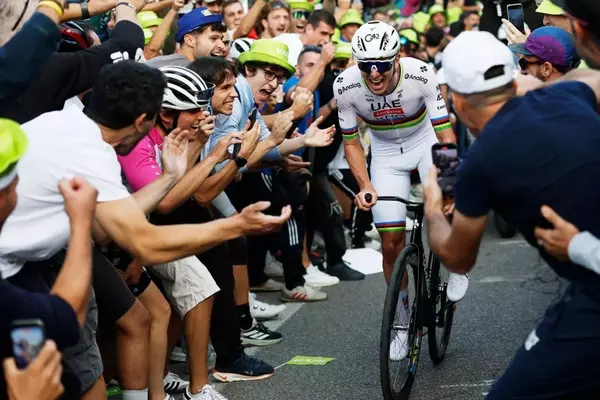
In a surprising move, Tadej Pogačar, known for often obscuring his intricate power metrics on public platforms, has for the first time openly displayed his detailed training power zones through a recent Strava upload. This candid disclosure, stemming from a training session that also featured an appeal for enhanced fan respect, provides an invaluable window into the physical demands and structured intensity of a world champion's preparation. With over a million followers now privy to this information, the data has become a focal point of discussion, verifying previously circulated estimates about his exceptional athletic capacity.
The uploaded data showcases Pogačar's performance during a 132-kilometer ride from Valencia to Calpe, Spain, where he maintained an impressive average power output of 299 watts, peaking at a formidable 800 watts. More significantly, the post delineates his calculated power zones, including recovery (0-237W), endurance (238-323W), tempo (324-387W), threshold (388-452W), VO2 Max (453-516W), anaerobic (517-645W), and neuromuscular (646+W). These figures notably align with earlier projections, such as an FTP (Functional Threshold Power) of around 415 watts, which now falls squarely within his defined threshold zone, offering concrete validation of his extraordinary physiological benchmarks.
The Nuances of Elite Training Metrics
Pogačar’s disclosed power zones, while wide-ranging, offer significant insights into his training philosophy. For example, his Zone 2 endurance power, previously stated as between 320 and 340 watts in an interview, closely matches the 238-323 watt bracket revealed on Strava, particularly when considering the dynamic nature of prolonged efforts. He emphasizes that strict adherence to static power zones can be counterproductive, acknowledging that factors like ride duration and recovery significantly alter optimal power output, advocating for flexibility and adaptation rather than rigid numbers.
Furthermore, Pogačar expresses a degree of skepticism regarding the absolute reliability of power meters, citing environmental variables such as temperature and potential calibration inaccuracies. Despite these reservations, he values the comparative insights gained when juxtaposing power data with heart rate monitoring, a method he has consistently employed since his formative years as a cyclist. This integrated approach allows him to achieve a comprehensive understanding of his body's responses to training stimuli, ensuring that while technology provides valuable metrics, the athlete's intuition and physiological feedback remain paramount in fine-tuning his training regimen.