Trending Searches
Waxed Granite: The Future of Mountain Bike Trails?
Pathfinder Trail Building recently highlighted an intriguing new substance: waxed granite, used to revitalize a jump line at Carver Lake Bike Park in Woodbury, Minnesota. This caught the attention of Singletracks, prompting an investigation into how and why trail developers opt for non-indigenous materials. Discussions with Adam Buck, owner of Pathfinder Trail Building, and Reed Smidt, Woodbury's Recreation Operations Director, provided valuable perspectives. Mike Carpenter, Lead Bike Park Project Manager for American Ramp Company, also shared his insights on this emerging trend in trail construction.
Building trails in the Twin Cities area presents unique challenges due to its erosion-prone sandy and clay soils, with a scarcity of rock. Trail builders frequently seek durable solutions to protect existing paths, prioritizing a long-lasting, aesthetically pleasing outcome that minimizes ongoing upkeep. Local preferences, however, lean towards natural-looking trails, often rejecting alternatives like chip seal, which riders find unappealing. This demand for both durability and natural aesthetics led to the consideration of waxed granite as a viable solution, with the jump line at Carver Lake Bike Park becoming a crucial testing ground.
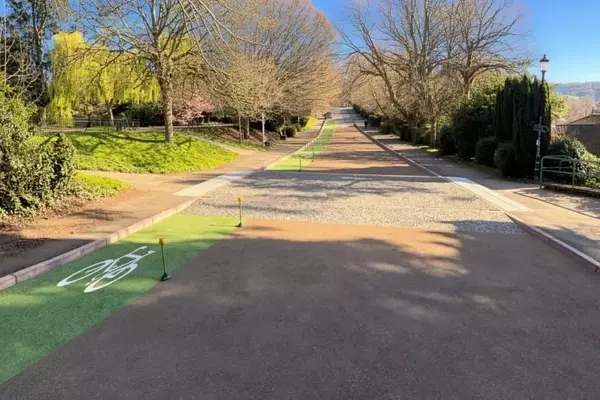
The jump line at Carver Lake Bike Park, constructed in 2023, suffered from severe water erosion, leading to constant maintenance demands on both staff and volunteers. Initial attempts with pond clay proved problematic, as it retained moisture longer than native soil, extending trail closures after rain. A subsequent trial with SoilTac and red rock aggregate also failed on steep slopes during heavy rainfall. Recognizing the need for a more sustainable approach, Buck proposed waxed granite, a proprietary material developed by Kafka Granite. This innovative mixture of crushed stone and engineered wax polymers promises an erosion-resistant, dust-free surface that maintains a natural appearance, addressing both the durability and aesthetic concerns.
Despite its promise, waxed granite is not without its nuances, described as similar to working with granite dust and requiring thorough compaction. While it significantly reduces erosion and maintenance, a complete absence of upkeep is unrealistic, as all trails necessitate some level of care. The material’s granular nature can lead to loose particles on the surface, which, though not affecting traction, are noticeable to riders. The initial investment in waxed granite is higher than traditional materials, but its long-term benefits in reducing maintenance costs make it a financially sound decision. This innovative material is expected to be predominantly used in bike parks or on shorter trails, but its success could pave the way for broader applications in future trail systems, pushing the boundaries of sustainable trail development.