Trending Searches
Affordable Tour de France Bikes: A Comprehensive Guide
For cycling enthusiasts who dream of owning a professional-grade bicycle, this comprehensive guide offers practical strategies to acquire a Tour de France-level machine without the prohibitive price tag. From exploring last season's models to navigating the second-hand market and even participating in professional team auctions, aspiring riders can discover various avenues to make their high-performance bike dreams a reality. These methods aim to demystify the high cost associated with top-tier racing bicycles, making them more accessible to a wider audience.
Detailed Insights on Acquiring a Cost-Effective Tour de France Bicycle
For many, the allure of a bicycle from the Tour de France is undeniable, promising unparalleled speed and performance. However, the premium price tags, often reaching into the thousands, can be a significant barrier. Renowned cycling expert Liam Cahill, on Tuesday, July 7, 2026, shared invaluable tips for cyclists aiming to own a top-tier racing bike without depleting their savings.
Professional Tour de France bicycles are engineered with precision, much like Formula 1 cars, designed for peak performance. They feature the lightest frames, often stripped of paint for minimal weight, and are equipped with cutting-edge gears, braking systems, and aerodynamic components. Every element, from advanced tires suited for specific stages to specialized components from boutique brands and 3D-printed saddles, is chosen to maximize speed and efficiency. While it's possible to purchase Tadej Pogacar's exact Colnago Y1RS for approximately £14,549, such an investment is beyond most budgets. Thankfully, several strategies can significantly reduce this cost.
One initial approach is to identify more budget-friendly options directly from the current year's race. Although the term 'cheap' is relative in this context, some professional team bikes, like the Cube Litening, can be half the price of ultra-high-end models such as the S-Works Tarmac SL9, still costing around eight or nine thousand pounds.
A more substantial saving can be achieved by looking at previous year's models. When a new iteration is released, like the Specialized Tarmac SL9 replacing the SL8, the older model's price often drops significantly. Despite minor performance differences—the SL9 is only claimed to be 4 watts faster—the previous year's model remains a high-performance machine at a reduced cost. Major manufacturers like Canyon and Giant also follow similar pricing strategies during new product launches, making it worthwhile to monitor these announcements for potential deals.
Further savings can be found by opting for lower-end models within a brand's range. While professional bikes are outfitted with the absolute best, the performance gap between top-tier and second-tier components often translates to fractional improvements that are barely noticeable to the average rider. For instance, choosing a Canyon Aeroad CF SLX over the top-of-the-line Aeroad CFR still provides excellent aerodynamic capabilities, sophisticated integrated cockpits, and electronic shifting, but at a vastly reduced price. These lower-tier models might even offer a more comfortable ride with slightly heavier frames tuned for general use and gear ratios better suited for varied terrain.
For the most significant savings, the used market—platforms like Facebook Marketplace or eBay—is an excellent resource. Here, enthusiasts can find a wide array of Tour de France-worthy bikes at remarkably low prices. However, purchasing a used bike often entails replacing worn parts like chains and bar tape and potentially undertaking mechanical work, such as servicing bottom bracket and headset bearings, which might require new tools or considerable time. Despite these potential efforts, the financial benefits often outweigh the inconveniences.
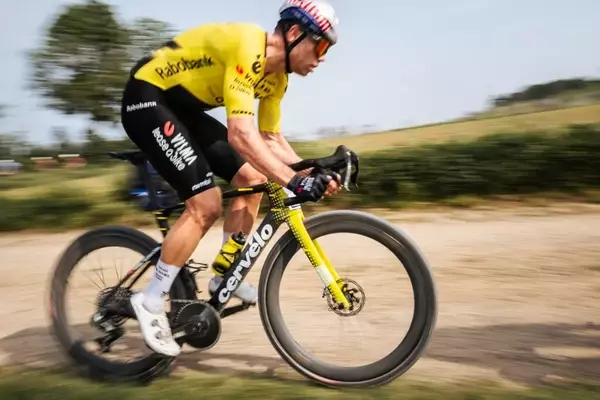
For those seeking a truly unique acquisition, securing an actual professional team bike is an option. Teams, including Visma, sometimes host end-of-season sales at their service courses, where bikes ridden by top athletes become available. Websites like Bike Room also specialize in selling former team bikes, often with a one-year warranty, ensuring they are in good working order. While the history of these bikes' usage might vary, owning a genuine pro bike offers immense satisfaction and significant savings.
This detailed guidance, compiled by Liam Cahill, provides a comprehensive roadmap for cyclists to navigate the complexities of the high-end bicycle market, enabling them to make informed decisions and secure their dream bike without overspending.
This guide serves as an invaluable resource for cycling enthusiasts, offering a detailed pathway to owning a high-performance racing bicycle without the exorbitant cost. It emphasizes that a dream bike is attainable through smart shopping, patience, and a willingness to explore various market segments. The insights provided encourage a more practical and accessible approach to high-end cycling, making the elite world of Tour de France bikes a tangible reality for more riders.