Trending Searches
Mastering the Art of Spybaiting: A Guide to Finesse Bass Fishing
In the expansive realm of bass fishing, certain lures frequently command the spotlight, garnering widespread attention and praise. Yet, amidst the popular jigs, swimbaits, crankbaits, and soft plastics, there exists a discreet but exceptionally effective lure that often goes unnoticed: the spybait. This unassuming hard bait, with its slender, minnow-like profile and small propellers, stands in stark contrast to its more flamboyant counterparts. Its true power lies in its subtlety, making it an indispensable tool when facing challenging conditions such as clear water, high fishing pressure, or when bass prove particularly elusive. This comprehensive guide will explore the intricacies of spybaiting, illuminating its unique mechanics, optimal applications, and proven techniques to help anglers unlock its full potential.
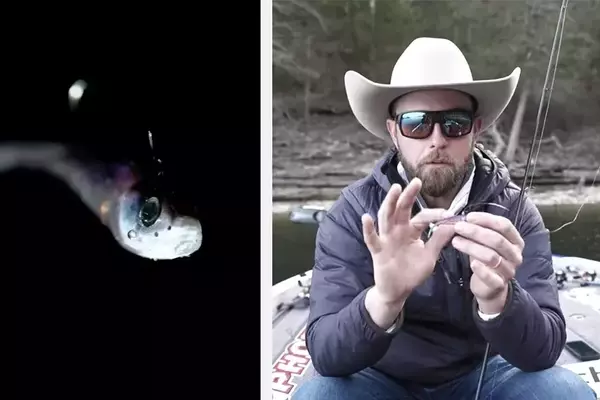
A spybait is characterized as a finesse hard bait, typically ranging from three to five inches in length and weighing between 1/4 and 1/2 ounce. Its most distinctive feature is the pair of small propellers situated at both its front and rear. As the lure is retrieved, these propellers rotate, generating a delicate vibration and a fine trail of bubbles in the water. Unlike the erratic darting of a jerkbait or the pronounced wobble of a crankbait, a spybait’s action is a fluid, rolling shimmy, designed to subtly mimic an injured or struggling baitfish. During its descent, the bait maintains a horizontal posture while continuing to shimmy, an action that consistently triggers strikes from predatory bass. This understated presentation is not merely a design choice but a strategic advantage, allowing the lure to “whisper” to fish rather than “shout.” The spybaiting technique originated in Japan, a region renowned for its clear and heavily fished waters, where anglers were compelled to innovate and develop more refined methods. Companies such as Duo Realis were instrumental in introducing and popularizing this sophisticated lure in Western markets, paving the way for its increasing adoption among bass fishermen, particularly those targeting spotted bass and smallmouth in transparent lake environments.
Bass, despite being formidable predators, are far from indiscriminate in their feeding habits. In environments with exceptionally clear water or those subjected to intense fishing pressure, they become highly accustomed to various lure presentations. Overly flashy or aggressive lures often lead to spooking fish rather than enticing them to strike. This is precisely where the spybait excels, offering a distinct advantage by capitalizing on its inherent subtlety. The spybait is meticulously designed for a nuanced approach, typically employed with a light fishing line and a slow, steady retrieve, ensuring a natural and unthreatening presentation. The gentle rotation of its propellers and its characteristic shimmy impart just enough lifelike movement to deceive fish into perceiving it as a vulnerable baitfish, yet not so much that it appears artificial or alarming. The outcome is a lure that bass accept without hesitation, interpreting it as an effortless and appealing meal casually drifting through their territory, making it an irresistible target.
Effective spybaiting necessitates a specialized gear setup that deviates significantly from conventional bass fishing equipment. Given its finesse nature, using light lines and appropriately matched tackle is crucial for success. For the rod, a medium-light spinning rod, ideally between seven and seven and a half feet long, is recommended. This rod should possess a soft tip to ensure subtle presentation and sensitivity, yet offer sufficient backbone to manage larger fish. A parabolic bend in the rod is also essential for maintaining tension on the small treble hooks of the spybait, preventing fish from dislodging them during the fight. A good example is the Alpha Angler Spybait Rod. For the reel, a larger spinning reel, in the 3000 to 4000 size range, is preferred due to its smooth drag system and larger arbor. A larger arbor allows for greater line retrieval per crank and improved control over the fish. The Shimano Vanford, known for its exceptionally smooth drag, is a top choice. The fishing line is perhaps the most critical component. A mainline of five- to eight-pound Cortland Masterbraid should be used, followed by a five- to seven-pound Sunline FC Sniper fluorocarbon leader. Fluorocarbon is vital because it sinks, helping to keep the bait at the desired depth, and its near-invisibility in clear water significantly reduces detection by wary fish. Although these line sizes may seem unusually light, they are instrumental in the spybait’s effectiveness. Finally, while most spybaits come equipped with decent treble hooks, it is always advisable to inspect and, if necessary, replace them with higher-quality options like Gamakatsu G-Finesse trebles. These hooks offer superior strength in a lighter wire package, which is crucial for finesse baits where dull or weak hooks can easily lead to lost fish.
The art of spybaiting is elegantly simple, requiring less complex manipulation compared to lures like jerkbaits, which demand specific rhythms, or topwaters, which require precise walking actions. Fundamentally, spybaiting involves a straightforward “cast and retrieve” approach, yet mastering a few subtle details can significantly enhance its effectiveness. Begin by making the longest possible cast, as spybaits are designed to cover extensive areas and maintain a natural appearance throughout their retrieve. Once the lure hits the water, allow it to sink to the desired depth. Spybaits typically descend at a rate of approximately one foot per second, so counting down will help you position the bait precisely where fish are holding or where they appear on your sonar. For instance, to target bass at a depth of ten feet, allow the spybait to sink for a ten-count before initiating your retrieve. The core of spybaiting lies in a slow and steady retrieve; simply reel at a consistent, unhurried pace, letting the lure perform its inherent action without any abrupt jerks, twitches, or pops. Maintaining a smooth and uniform motion is key. Occasionally, introduce a brief pause in your retrieve, especially in deeper water. This momentary halt causes the spybait to shimmy and fall, mimicking a dying minnow, an action that frequently provokes additional strikes. When a fish bites, your hookset must be gentle. Unlike the forceful sweep required for jigs, the light lines and small treble hooks of a spybait necessitate a steady, sweeping set. Instead of a hard snap, simply continue reeling until the rod loads up, then apply steady pressure, similar to a horizontal dropshot hookset. This careful approach prevents pulling the bait free from the fish’s mouth.
Spybaits are exceptionally effective in particular fishing scenarios and conditions. While they can entice fish across various depths and circumstances, their true potential is unlocked when specific environmental factors align. One of the most crucial conditions is water clarity. Spybaits perform optimally in clear water where visibility extends beyond four to five feet. Since bass primarily target spybaits by sight, good water clarity is indispensable for attracting bites. They are also incredibly effective for targeting suspended fish, whether around points, humps, or over deep open water. Before the advent of advanced sonar technologies like Livescope, spybaits were instrumental in coaxing bites from these suspended bass, with just a slight shimmy proving enough to trigger a strike. Furthermore, spybaits are particularly potent during the post-spawn period and throughout the heat of summer. These seasons often find bass under increased pressure and stress, making them more wary. In such conditions, the subtle presentation of a spybait can be precisely what’s needed to elicit a reaction. Lastly, sunny conditions are generally more favorable for spybaiting. As it is primarily a visual bait, sunlight enhances its visibility, allowing bass to more easily spot and pursue it. While spybaits can still be effective on cloudy days, their use is typically restricted to shallower water, generally ten feet or less, where visibility is less compromised.
Although spybaiting appears straightforward, anglers often make several common errors that can hinder their success. Captain Andy Full, an expert guide from Buffalo, NY, and co-host of the Serious Angler Podcast, frequently observes one particular mistake: an overly aggressive hookset. Anglers, excited by a subtle bite, tend to “swing for the fences,” as they might with a jig. However, with the spybait’s light lines and small treble hooks, a hard hookset will almost invariably pull the bait directly out of the fish’s mouth, leading to a lost fish. Captain Full emphasizes that instead of an immediate, forceful hookset, anglers should simply continue reeling until the rod visibly loads up. At that point, a slow, continuous sweeping motion with the rod is the most effective way to secure the fish. This “sweep set” ensures the small treble hooks embed properly without tearing free. Additionally, managing the fight with a spybait requires a delicate touch. A loose drag setting, combined with a patient approach, significantly increases the chances of landing the fish. It’s a fine balance: maintaining enough pressure to prevent the fish from dislodging the hooks, yet not so much that the light line snaps or the hooks pull out. Any sudden, aggressive movement during the fight can result in the fish escaping. Therefore, when using baits equipped with small treble hooks, taking your time and being deliberate during the fight is absolutely essential.