Trending Searches
Tour de France Grand Depart Tech Insights
The opening stages of the Tour de France are always a fascinating showcase for the latest innovations in cycling technology, and the 2026 Grand Depart in Barcelona proved no exception. With revamped team time trial regulations encouraging new strategies, teams and riders have pushed the boundaries of equipment optimization, leading to a host of intriguing developments in bike design, components, and rider setup. This year's race spotlights a relentless pursuit of speed and efficiency, from bespoke chainrings to advanced aerodynamic helmets, revealing how elite cycling continues to embrace cutting-edge engineering.
Tour de France Grand Depart: A Deep Dive into Cutting-Edge Cycling Technology
The 2026 Tour de France kicked off dramatically in Barcelona with a team time trial (TTT), marking the first such opening since 1971. Team Visma-Lease a Bike emerged victorious, propelling Jonas Vingegaard into the coveted yellow jersey, echoing Eddy Merckx's triumph 55 years prior. This year's TTT featured new, more dynamic rules, where individual riders' times now contribute to the team's overall performance, with the first finisher's time determining the team's standing. This change incentivizes teams to strategically deploy their riders, often seeing domestiques drop off early to provide a powerful lead-out for their general classification (GC) contenders or strongest climbers, a tactic prominently displayed during Saturday's final ascent.
A close inspection of the equipment used by elite cyclists at the Grand Depart revealed several key technological trends. One notable observation was the widespread adoption of narrower tires, with many riders opting for 25mm Continental GP5000 TT TR tires, even on bikes capable of accommodating wider 30mm versions. This choice suggests a deliberate strategy to minimize weight and aerodynamic drag. Additionally, the proliferation of 3D-printed accessories, titanium components, increased stem spacers, and enhanced chain retention devices underscored a meticulous approach to marginal gains.
Key riders showcased their specialized setups. Tadej Pogačar's Colnago TT2, reportedly capable of meeting the UCI's 6.8kg weight limit, was equipped with Enve SES Pro wheels and an imposing 64T Carbon-Ti single chainring, complemented by a K-Edge chain catcher to prevent chain drops. Pogačar, known for his preference for short cranks, continued with 160mm versions, prioritizing an aggressive aerodynamic position. His primary rival, Jonas Vingegaard, rode a stripped-back, unpainted Cervélo P5, saving crucial grams. Vingegaard's setup featured a very low base bar for an aggressive solo climbing position and wider 700x30c Vittoria Corsa Pro Speed tires, indicating a different approach to tire optimization.
Other notable equipment included Van Rysel XCR TT bikes, developed with Swiss Side, and featuring custom 3D-printed Leap brake levers and blip holders for enhanced shifting control. The Decathlon CMA CGM team sported unreleased Van Rysel time-trial helmets, distinguished by integrated visors and aerodynamic tails. Specialized's new S-Works Shiv TT, as ridden by Remco Evenepoel, unveiled a significantly chunkier rear end incorporating a "Win Fin" design, a departure from its current svelte iteration. Evenepoel's bike also featured a massive 68T chainring, reflecting his powerful riding style.
The Grand Depart also provided glimpses of future technology, including prototype Shimano Dura-Ace rims, hubs, and pedals, signaling imminent commercial release. Meanwhile, EF Education-EasyPost riders, such as Max Walker, utilized the updated Cannondale SuperSlice, and Team UAE Emirates-XRG mechanics meticulously prepared bikes with customized extensions and lightweight components. The extensive use of raw carbon finishes on bikes like Michael Matthews' Giant Propel Advanced SL and Pogačar's Colnago Y1Rs demonstrated the ongoing quest for weight reduction. Furthermore, the increasing adoption of 3D-printed computer mounts and number holders highlights the fine-tuned customization employed at cycling's highest echelons.
The Relentless Pursuit of Performance: A Testament to Human Ingenuity and Technological Advancement in Professional Cycling
The Tour de France Grand Depart is more than just a bike race; it's a living laboratory for innovation, showcasing the relentless pursuit of performance through both human and technological advancement. Observing the intricate details of each rider's machine, from tire width to chainring size and 3D-printed components, offers profound insights into the marginal gains philosophy that dominates elite sports. The shift in time trial rules, which now reward individual performance within a team context, has only amplified this trend, leading to highly specialized equipment tailored to specific rider roles and race conditions. This constant evolution not only pushes the boundaries of engineering but also underscores the dedication of teams and athletes to squeeze every possible advantage from their gear. It inspires us to reflect on how precision, customization, and an unwavering commitment to improvement can lead to extraordinary achievements, not just in cycling, but in any field where excellence is sought.
Related Articles

UCI Cracks Down on Ice Socks at Tour de France Amid Soaring Temperatures
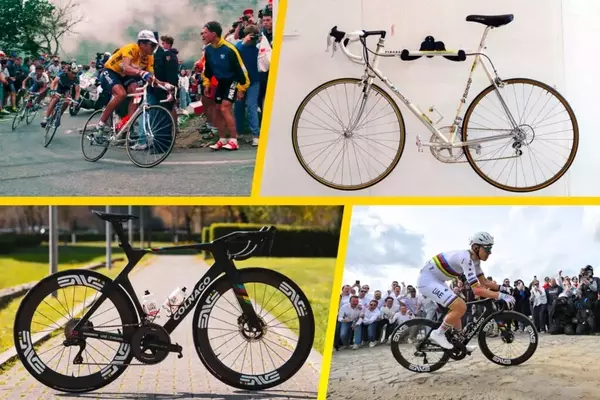
Evolution of Tour de France Bikes: Pogačar's Colnago Y1Rs vs. Indurain's 1994 Pinarello