Trending Searches
Vingegaard's Tour de France Lead Under Pressure on Hilly Stages
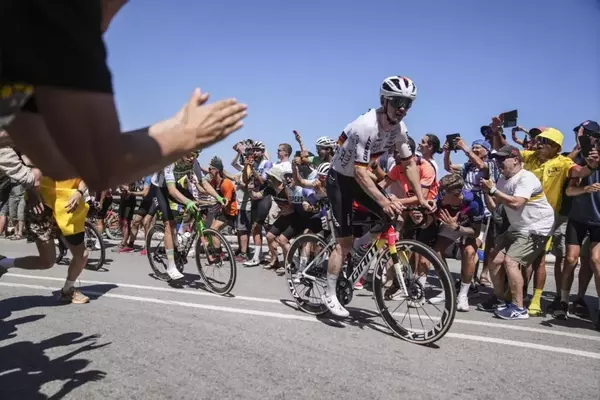
Jonas Vingegaard, after clinching the coveted yellow jersey in the initial stage of the Tour de France, now faces mounting pressure. On the second stage, an uphill finish saw his lead dramatically reduced to a mere six seconds by the formidable duo of Tadej Pogačar and Isaac Del Toro. Vingegaard openly acknowledges his struggle with explosive, anaerobic climbs, yet he remains satisfied with his performance and holding onto the jersey. His team, Visma-Lease a Bike, is prioritizing his overall position rather than an aggressive defense of the yellow jersey on every challenging ascent, understanding that Vingegaard's strengths lie in more sustained climbs.
The race narrative continues to unfold with intense competition at the forefront. Vingegaard's initial declaration to savor each moment in yellow has been tested early on. Despite Pogačar and Del Toro's combined efforts to create a significant gap, Vingegaard's resilience ensured the time difference remained minimal. This early challenge highlights the dynamic nature of the Tour, where every second counts and strategic decisions are crucial for long-term success. The focus for Vingegaard and his team is now on navigating the remaining stages smartly, conserving energy, and leveraging his strengths in the more favorable terrain to come.
Yellow Jersey: A Precarious Hold Amidst Early Challenges
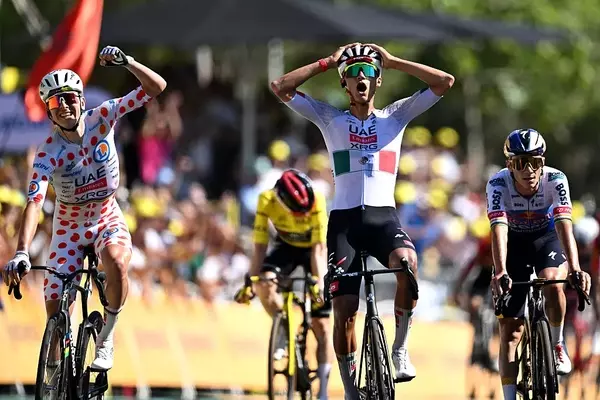
Jonas Vingegaard's tenure in the Tour de France yellow jersey has been immediately put to the test, with his initial advantage significantly eroded on the second stage. Following a strong performance on day one, Vingegaard's lead over rival Tadej Pogačar was cut to just six seconds after an uphill finish on Montjuic. This challenging terrain, which Vingegaard describes as "not my favourite kind of climb," saw Pogačar and his teammate Isaac Del Toro launch a powerful dual attack, showcasing their explosive capabilities. Despite the pressure and the narrow time difference, Vingegaard expressed contentment with retaining the jersey, emphasizing his commitment to enjoying every day of the race, a sentiment perhaps deepened by a serious crash he experienced two years prior at Itzulia Basque Country.
The strategic implications of this early shift are considerable. While Vingegaard successfully limited his losses, the stage highlighted a potential vulnerability on short, sharp, anaerobic climbs. Visma-Lease a Bike's sports director, Marc Reef, affirmed that Pogačar's ability to outsprint Vingegaard was anticipated, explaining that Vingegaard is inherently less explosive than some of his competitors. The team's current approach is not to aggressively defend the yellow jersey at all costs on every stage, especially those that don't suit Vingegaard's strengths. Instead, the focus remains on ensuring he stays within contention for the general classification, with an eye towards stages that better align with his climbing style. This cautious yet strategic approach aims to preserve his energy for crucial moments later in the race, acknowledging the long and demanding journey ahead in the Tour de France.
Team Strategy: Balancing Defense and Long-Term Goals
In the wake of a challenging second stage that saw Jonas Vingegaard's Tour de France lead shrink, the strategy of his team, Visma-Lease a Bike, has come into sharper focus. Rather than an aggressive, all-out defense of the yellow jersey on every stage, the team is adopting a more measured approach. Vingegaard himself conceded that the uphill finish on Montjuic was not his preferred type of climb, being highly anaerobic and less suited to his natural abilities. Despite this, his ability to minimize the time loss to Tadej Pogačar and Isaac Del Toro was a positive outcome, allowing him to maintain the yellow jersey for another day, albeit with a reduced advantage.
Visma-Lease a Bike's sports director, Marc Reef, elaborated on this strategy, indicating that the team's primary goal is to keep Vingegaard in overall contention rather than rigidly clinging to the yellow jersey from the outset. Reef explained that Pogačar's superior explosiveness in sprints, particularly after demanding climbs, is an expected characteristic. The team is prepared for further challenges on similar stages, such as the upcoming 1.5-kilometer, 7% gradient climb. Their plan is to navigate these stages effectively, ensuring Vingegaard remains competitive without expending excessive energy in battles that may not play to his strengths. This pragmatic approach aims to conserve Vingegaard's resources for the more decisive, longer climbs that are yet to come in the Tour de France, ultimately optimizing his chances for overall victory.